Kyoto After 50: A Comfort-First Guide for Travelers 50+
Kyoto is one of the world's great cultural cities — and more senior-friendly than its temple stairs suggest. Here's how to experience it in comfort.
⚡ Key Takeaways
- Good news first: central Kyoto is flat, and the trains, subways, and buses are excellent.
- Two honest caveats: many temples involve stairs, and traditional ryokan mean sleeping on floor futons.
- Best base: central Kyoto (near Kyoto Station or downtown Kawaramachi) — flat with the best connections.
- Ryokan vs. hotel: for most 50+ travelers, a Western-style hotel wins on comfort. Some ryokan offer Western beds — ask.
- Best months: mid-April–May and October–early November — mild, fewer crowds than peak seasons.
- Temple strategy: you don't need to climb them all. Pick 2–3 must-sees, enjoy the rest from the gardens.
Is Kyoto a Good Choice After 50?
Kyoto might be the single best major Asian city for a first-time 50+ visitor to the region. It's clean, extraordinarily safe, and — this surprises many people — central Kyoto is flat. The city sits in a basin; the famous hills are at the edges where the temples are. Day-to-day getting around the center involves no more climbing than any flat city.
The two things to plan around: temple stairs and ryokan floor-sleeping. Many of Kyoto's great temples sit on hillsides or approach via long staircases — but here's the liberating truth: you don't have to climb every one. Kyoto has 1,600+ temples. Seeing five thoughtfully beats rushing through fifteen. And while ryokan (traditional inns) are culturally wonderful, sleeping on a floor futon and rising from tatami repeatedly is genuinely hard on 50+ knees. A Western-style hotel — or a ryokan with Western beds — solves this completely.
Where to Stay: Central Kyoto Wins for Comfort
Near Kyoto Station / Shimogyo — Best Transport Hub
Kyoto Station is the city's front door: Shinkansen (bullet train), JR lines, subway, and buses all converge here. The surrounding area is flat, modern, and packed with hotels at every level. If you want maximum convenience — step off the train, drop bags, start exploring — base here. It's slightly less atmospheric than the old districts, but for 50+ comfort, logistics beat atmosphere.
Downtown / Nakagyo (Kawaramachi, Karasuma) — Best All-Rounder
The downtown core between the Kamo River and Karasuma Street is flat, walkable, and full of restaurants, shops, and hotels. You're central to everything: a short subway or taxi ride to most temples, evening strolls along the river, Kyoto's famous food streets at your doorstep. This is the best balance of convenience, comfort, and character.
Gion / Higashiyama — Atmospheric, Hillier
Gion (the geisha district) and Higashiyama are Kyoto's most evocative neighborhoods — preserved machiya townhouses, lantern-lit lanes, temples at every turn. They're also where the hills begin: the approach to Kiyomizu-dera, for example, is a famously steep uphill walk through crowded lanes. Lovely to visit; staying here means committing to slopes. If you do, choose a hotel on the flatter western edge, not up the hill.
Arashiyama — Beautiful but Spread Out
The bamboo grove, the river, the temples — Arashiyama is gorgeous. But it's 30+ minutes west of central Kyoto, and its sights are spread across a wide area involving real walking. As a day trip (easy by train), it's perfect. As a base, it adds transit time to everything else you'll do.
Area Map
See where each area sits. Green = best for comfort; yellow = good with caveats; orange = atmospheric but hillier.
Area Comparison at a Glance
| Area | Terrain | Transport | Senior Comfort |
|---|---|---|---|
| Kyoto Station area | Flat | Best (all lines) | ★★★★★ Max convenience |
| Downtown (Nakagyo) | Flat | Excellent | ★★★★★ Best all-rounder |
| Gion / Higashiyama | Slopes, some steep | Good (bus) | ★★★★ Visit; stay carefully |
| Arashiyama | Mostly flat, spread out | Good (train) | ★★★★ Day trip ideal |
Ryokan vs. Hotel: The Floor-Sleeping Question
This deserves its own section because it catches travelers off guard. A traditional ryokan experience — tatami-matted rooms, futon bedding laid on the floor, kaiseki dinner, communal or private wooden baths — is genuinely special. But consider honestly:
- Sleeping: futons are on the floor. Getting up multiple times (bathroom at night, morning) means rising from floor level — hard on knees, hips, and backs.
- Dining: traditional meals are served at low tables with floor cushions. Some ryokan offer table-and-chair dining on request.
- Bathing: many ryokan have beautiful baths, but they're often step-in tubs or require navigating wet stone floors.
The comfort-first answer: book a Western-style hotel as your base, and try one night in a ryokan that explicitly offers Western beds if the experience calls to you. Many modern ryokan now list "beds available" — email and ask. You get 90% of the cultural experience (the building, the garden, the kaiseki dinner, the hospitality) with 100% of the sleep comfort.
Hotel Comfort Checklist: Kyoto Edition
✅ Before you click "book," confirm:
- Western beds — if considering a ryokan, verify explicitly. "Japanese-style room" usually means futons.
- Elevator — modern hotels have them; traditional machiya guesthouses often don't.
- Walk-in shower or accessible tub — Japanese bathrooms vary wildly; deep soaking tubs are lovely but hard to climb in and out of.
- Proximity to a subway or JR station — Kyoto's buses are good but crowded; rail is faster and involves less standing.
- Quiet room — request away from the street; Kyoto's nightlife districts stay lively late.
- Breakfast options — a proper breakfast (Western or Japanese) before a temple day is worth paying for.
- Laundry — for trips over a week, in-hotel laundry beats packing for two weeks.
Temples Without the Punishment: A Selective Strategy
Kyoto has over 1,600 Buddhist temples and 400 Shinto shrines. You cannot see them all, and trying will exhaust you. Here's a comfort-ranked shortlist:
- Kinkaku-ji (Golden Pavilion) — mostly flat garden paths, one gentle slope. The single most rewarding temple for minimal effort.
- Ryoan-ji (rock garden) — flat, contemplative, benches. Fifteen minutes of pure calm.
- Fushimi Inari (thousand torii gates) — the famous gates start right at the base; you can walk 15 minutes in for the iconic photos and turn back. The full mountain hike (2–3 hours, thousands of steps) is optional and skippable.
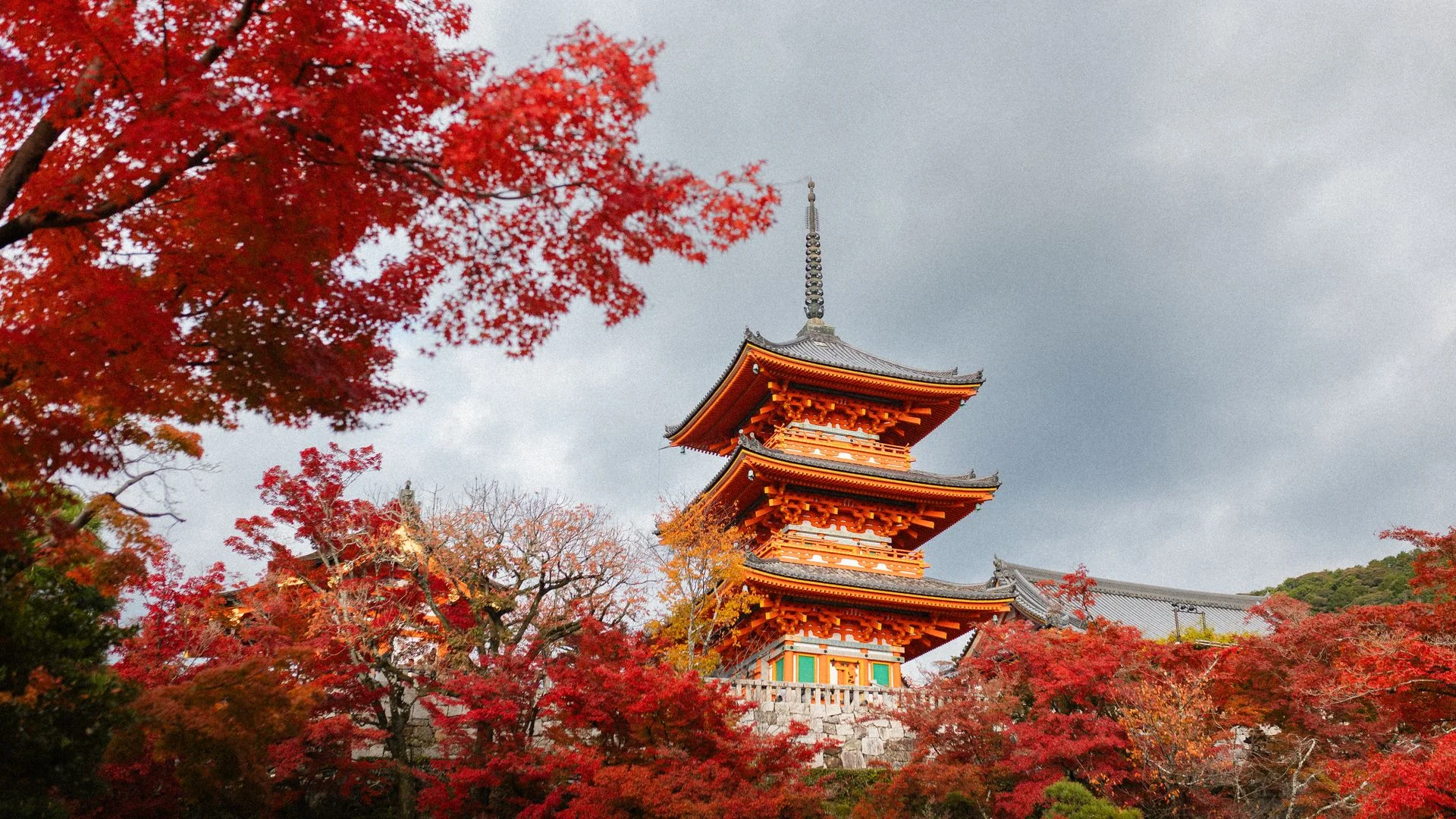
- Kiyomizu-dera — spectacular, but the approach is a steep 10–15 minute uphill through crowded lanes, plus temple stairs. Go early morning or consider viewing from below.
- Ginkaku-ji (Silver Pavilion) — a gentle uphill garden stroll, well-paced with rest spots.
The rule: one major temple per morning, gardens and neighborhoods in the afternoon. Temples open early (often 8–9 AM) — arriving at opening means fewer crowds and cooler air.
Getting Around: Kyoto's Transport Is Your Friend
- Subway + JR lines — the fastest, most comfortable way across the city. Get an IC card (Icoca/Suica) at the station and tap in/out.
- Buses — extensive but crowded, especially routes to popular temples. Fine off-peak; avoid the #100/#101 loops at midday in peak season.
- Taxis — plentiful, metered, and surprisingly affordable for short hops. The rear doors open automatically — don't pull them. A taxi from downtown to most temples runs a few dollars.
- Walking — central Kyoto's grid is flat and walkable; the Philosopher's Path and Kamo riverbanks are lovely level strolls.
When to Visit
Mid-April to May (after cherry-blossom peak) and October to early November (before autumn-color peak) are the sweet spots: mild 60–72°F (15–22°C), gardens still beautiful, crowds thinner, prices saner. The famous peaks — late March–early April (sakura) and mid-November (momiji) — are stunning but crowded and expensive; if you go then, book 6+ months ahead and brace for packed temples.
Summer (June–August) is hot and humid (85–95°F with humidity that makes it feel worse), plus rainy season in June. Winter (December–February) is cold (35–50°F) but clear, quiet, and atmospheric — temples in snow are magical, and you'll have them nearly to yourself.
How Much Time Do You Need?
Four to five full days covers Kyoto's essentials at a relaxed pace: eastern temples one day, Arashiyama and western temples another, central Kyoto and Nishiki Market, Nara as a day trip (45 minutes by train — the deer park is flat and delightful), and a buffer day. Add 2–3 days in Tokyo before or after if it's your first Japan trip; the Shinkansen between them is 2 hours of pure comfort.
Frequently Asked Questions
Is the language barrier a problem for seniors in Kyoto?
Less than you'd expect. Major stations, hotels, and tourist sites have English signage. Translation apps handle the rest. Kyoto is also one of the most orderly, low-stress cities to navigate — everything is signed, numbered, and on time.
Is Kyoto safe for solo women travelers?
Kyoto is among the safest cities in the world. Solo women travelers — including older women — routinely report feeling completely at ease, including at night in central areas. Standard awareness is enough.
Can I drink the tap water?
Yes, Kyoto's tap water is safe and high quality.
Do I need cash in Japan?
Carry more cash than you would in the US or Europe. Cards are increasingly accepted, but many temples, small restaurants, and shops are cash-only. ATMs at 7-Eleven and post offices accept foreign cards.
Get Kyoto Ideas in Your Inbox
Join the free waitlist for hand-picked travel ideas, comfort-first hotel notes, and fare alerts — written for travelers 50+.
Join the Free Waitlist