San Diego After 50: A Comfort-First Guide for Travelers 50+
Mild weather, flat waterfront walks, and a zoo you can enjoy without the climb — here's how to enjoy San Diego comfortably after 50, from Balboa Park to La Jolla.
⚡ Key Takeaways
- Best months: October–November. Days typically in the high 60s to low 70s°F — ideal walking weather, with thinner crowds than summer.
- Best base: Gaslamp Quarter or Little Italy — flat, walkable, and full of restaurants, with the waterfront minutes away.
- Don't miss: Balboa Park at your own pace (use the free park tram), the seals at La Jolla Cove from the flat sidewalk above, and a harbor cruise.
- Getting around: walk the waterfront and downtown, take the step-free MTS Trolley for longer hops, and use rideshares for La Jolla and Balboa Park's farther corners.
- Honest caveat: the zoo and parts of Balboa Park are hilly — ride the guided bus tour first, then walk only what suits you.
- June warning: the marine layer ("June Gloom") can keep mornings gray and cool. Fall is the sunnier, calmer bet.
Is San Diego Worth It After 50? The Honest Answer
San Diego is one of the easiest big-city escapes in America for travelers 50+: a flat, genuinely walkable waterfront, a compact downtown you can explore on foot, one of the country's great urban parks, and weather that cooperates most of the year. It is also unpretentious in the best way — come as you are, sit on a patio, and let the bay do the showing off. If you like Palm Springs' desert light or Santa Fe's art scene, San Diego is the cooler, coastal cousin — same relaxed pace, with an ocean breeze instead of desert heat.
The honest caveats: the city is spread out, so you will want the trolley or a rideshare for anything beyond downtown; the zoo and Balboa Park have real hills; and summer brings the biggest crowds and the highest hotel rates. None of that should stop you — all of it should shape how you plan the days.
When to Go: November Is the Sweet Spot
October and November may be the best months of all: daytime temperatures typically in the high 60s to low 70s°F, cool evenings in the 50s, and the summer crowds long gone. The ocean stays warm enough to look at happily, if not to swim in, and restaurant patios are at their pleasantest. December brings holiday lights to Balboa Park and the start of gray-whale season offshore, while January and February stay mild — a genuine winter escape from the East Coast cold.
June is the month to think twice about: the marine layer known as "June Gloom" can keep mornings gray and cool until midday. July through September is reliably sunny but also the busiest and priciest stretch, with summer crowds at the zoo, the beaches, and the Gaslamp. If you do visit in summer, do the zoo and Balboa Park at opening time, and save the waterfront for the golden-hour light.
Where to Stay: Gaslamp, Little Italy, and Coronado
Gaslamp Quarter — Best Overall
The historic downtown district, flat and walkable, with restaurants, theaters, and the waterfront a short stroll away. Staying here means morning walks along the Embarcadero, easy midday hotel breaks, and dinner without driving. It is lively at night — ask for a room away from the street if you are a light sleeper.
Little Italy — Relaxed and Walkable
Just north of downtown, this is the neighborhood pick: a farmers' market on Saturdays, cafes and trattorias on every corner, and a slightly quieter feel at night. Still flat, still an easy walk or short trolley ride to the waterfront.
Coronado — The Slow-Pace Base
Across the bay by ferry or bridge, Coronado is the island-town escape: a flat main street, a wide beach, and the historic Hotel del Coronado to admire from the sand. Lovely for a longer, slower stay — especially if you want mornings on the beach — but you will take the ferry or a rideshare for downtown sightseeing. Our hotel checklist approach applies just as well on the coast: elevator access, walk-in showers, and blackout curtains for early Pacific sunrises.
What to Do: The Comfort-First Hit List
Balboa Park, at your pace: the city's grand park holds museums, gardens, and the zoo, and the central Prado is mostly level strolling. The honest way to do it: pick one or two museums rather than trying to see them all, use the free park tram to move between areas, and treat the Spanish Village art studios and the Botanical Building as restful stops. The park's gardens are free to wander; museums charge admission, so check current rates before you go.
San Diego Zoo, by bus first: the zoo is wonderful and genuinely hilly. Start with the guided bus tour — it covers the grounds in about 35 minutes and shows you what is worth walking back to. Then walk only the flat sections that suit you, and know that wheelchairs are available to rent at the entrance. Go at opening, when animals are active and temperatures are kindest.
USS Midway Museum: a retired aircraft carrier docked on the waterfront, and one of the city's most memorable visits. The hangar deck and flight deck are easy, flat walking with elevators between them; some below-deck areas involve steep ladders, so skip those without missing the heart of the visit. The self-guided audio tour is excellent — take it at your own pace.
La Jolla Cove: a short drive north, and the easiest wildlife encounter in California. Harbor seals and sea lions haul out on the rocks below the cove, and you watch them from the flat sidewalk above — no beach climb needed. Bring binoculars if you have them, keep a respectful distance, and visit in the morning when the animals are most active. The village itself is a pleasant, walkable browse of galleries and cafes.
Old Town San Diego: the flat, open-air historic park where California began — adobe buildings, courtyards, mariachi music, and some of the city's most relaxed Mexican restaurants. It is a gentle half-day, and the trolley stops right there.
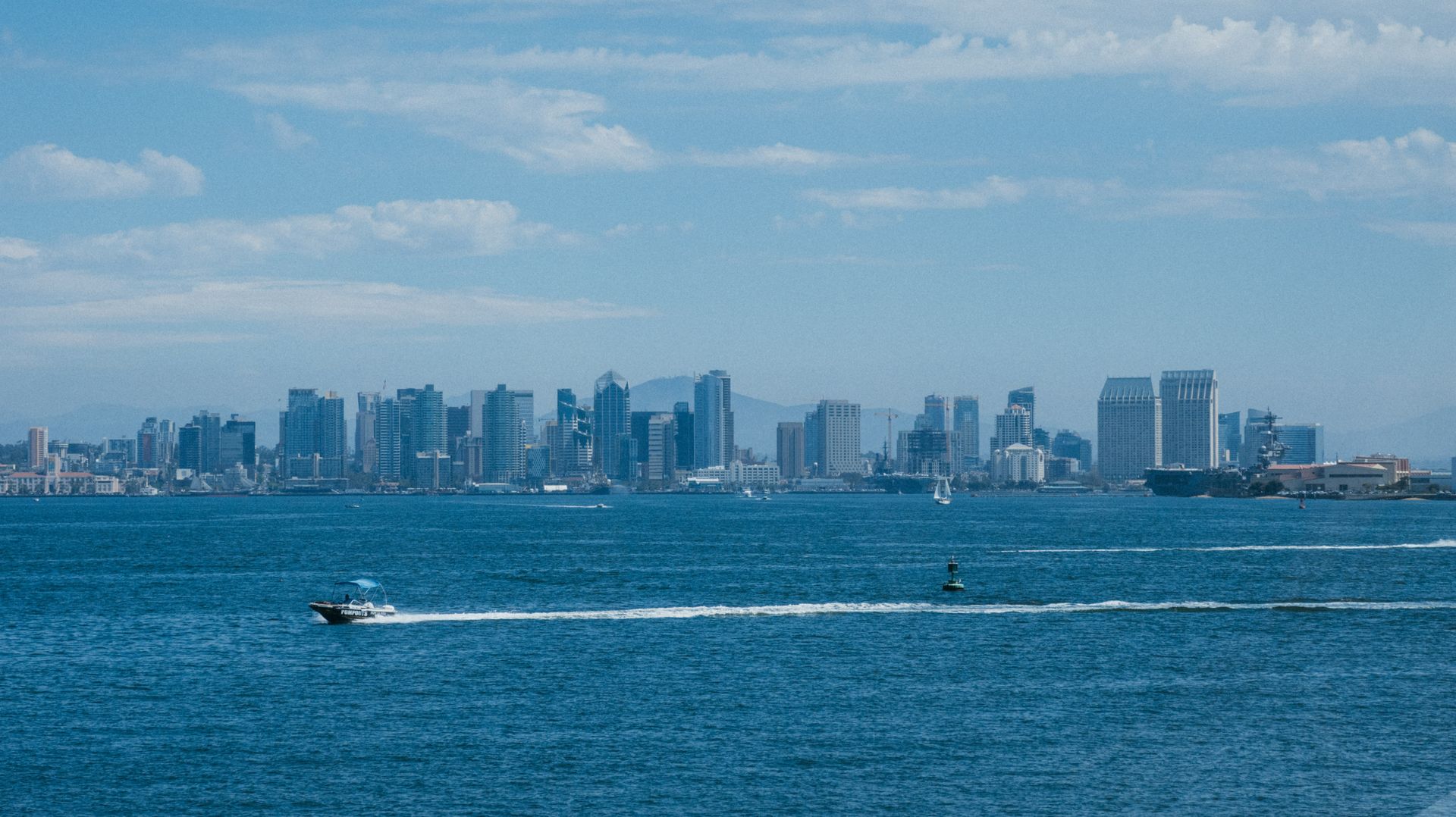
A harbor cruise: the most comfortable sightseeing in the city. One- and two-hour cruises leave from the Embarcadero, you sit the whole time, and you see the skyline, the naval base, and Coronado from the water. Sunset cruises are the classic choice — book ahead in fall weekends.
Day Trips: Honest Notes
Coronado (by ferry, about 15 minutes): the ferry from downtown is half the pleasure — a flat, easy crossing with skyline views. On the other side, the main street is flat and walkable, the beach is wide and gentle, and the Hotel del Coronado is worth a slow look from the sand. An easy, low-effort half-day.
Julian apple country (about 1 hour): in fall, the mountain town of Julian is at its best — apple pie, crisp air, and a main street you can walk in twenty minutes. November is late in the apple season, so call ahead to confirm orchards and pie shops are still open. The drive itself is winding in places; if you dislike mountain roads, skip it without regret.
Torrey Pines, by car and viewpoint: the coastal reserve north of La Jolla has dramatic cliffs and ocean views, and you can enjoy the scenery from the roadside overlooks without taking the trails. The paths down to the beach are steep — admire from above, and save your knees.
Del Mar (about 25 minutes): a small, flat beach town with a walkable main street, good restaurants, and a lovely beachfront path. A genuinely restorative half-day — and a good answer to the question of what to do with a slow afternoon.
Getting There and Around
San Diego International Airport (SAN) is small, calm, and close to downtown — one of the easiest airports you will ever use, with a roughly ten-minute drive to the Gaslamp Quarter. Many visitors also fly into Los Angeles and drive about two hours; that drive is straightforward freeway, but allow extra time on Friday afternoons.
Downtown and the waterfront are a pleasure on foot. For longer hops, the MTS Trolley is step-free and connects downtown, Old Town, and the stadium area, and it stops right at the airport's transit center via a short shuttle. La Jolla, Balboa Park's farther corners, and Coronado are easiest by rideshare — just budget for them, as distances add up. If you prefer not to drive at all, base yourself in the Gaslamp or Little Italy and let the trolley and rideshares do the work.
Coastal Comfort Checklist
Before you leave the hotel each morning
- Layers: a light jacket for the morning marine layer, air-conditioned museums, and cool evenings by the water — even when the afternoon is warm.
- Sun: sunscreen, a hat, and sunglasses. The coastal breeze makes the sun feel gentler than it is.
- Shoes: comfortable walking shoes with grip — waterfront paths are flat, but Balboa Park and the zoo have slopes.
- Timing: zoo and Balboa Park at opening; waterfront and La Jolla in the golden late afternoon; museums and the Midway at midday.
- Water: carry a bottle. The dry, mild air dehydrates you quietly, especially on the zoo's hills.
Area Map
Frequently Asked Questions
What is the best month to visit San Diego after 50?
October and November are hard to beat: daytime temperatures typically in the high 60s to low 70s°F, cool evenings, and thinner crowds than summer. June brings the marine layer ("June Gloom") and summer brings the biggest crowds, so fall is the comfort-first pick.
Is San Diego walkable for seniors?
The waterfront, Gaslamp Quarter, Little Italy, and Coronado's main streets are flat and walkable, with benches and frequent places to sit. Balboa Park's central Prado is mostly level, but the park and the zoo have slopes — take the free park tram and the zoo's guided bus tour first, then walk only the sections that suit you.
Can I see the La Jolla seals without climbing down to the beach?
Yes. The seals and sea lions at La Jolla Cove are best watched from the flat sidewalk above the cove — no beach climb needed. Bring binoculars if you have them, keep a respectful distance, and visit in the morning when the animals are most active.
Is the USS Midway Museum suitable for older travelers?
Mostly yes, with an honest caveat: the hangar deck and flight deck are easy, flat walking with elevators between them, but some below-deck areas involve steep ladders and low doorways. Skip those sections without missing the heart of the visit — the flight deck views and the audio tour alone are worth the trip.
Get Price-Drop Alerts for This Destination
Watching fares? We'll email you when prices drop 10% or more. Free.
Set a Free Price Alert →