Key West After 50: A Comfort-First Guide for Travelers 50+
Florida's warmest winter escape, at your pace: flat Old Town streets, the sunset ritual at Mallory Square, and the honest truth about getting around now that the free Duval Loop is gone.
⚡ Key Takeaways
- The big change: the free Duval Loop bus was suspended in January 2026. Key West Rides ($2, on-demand) runs through November 29, 2026; the new Island Hopper bus starts November 30, fare-free through December 6.
- Winter weather: December–February averages 76–78°F for highs and 66–68°F for lows, with under two inches of rain a month. The dry season runs December–April.
- Comfort pick for a base: Old Town for walkability, the quiet south end near the Casa Marina area for calm and beaches.
- Don't miss: the free nightly Sunset Celebration at Mallory Square (arrive an hour before sunset) and the Hemingway Home — $19, gate only, no senior discount.
- Skip the rental car: Old Town is walkable end to end, and street parking runs about $5–6 an hour.
- Comfort months: early December and November for quiet value; January–February for the driest, warmest-feeling days.
Is Key West Worth It After 50? The Honest Answer
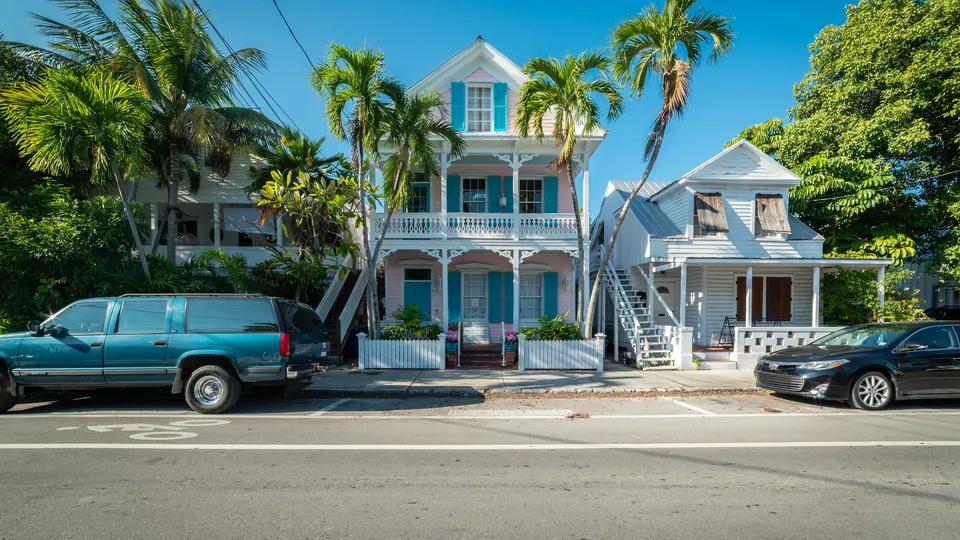
Key West is the warmest place in the continental United States in winter, and it is built for a slow pace: a flat island about two miles by four, pastel conch houses, roosters in the street, and a sunset that the whole town gathers to watch every single night. For 50+ travelers it is especially rewarding because almost everything worth seeing sits inside walkable Old Town, and the island rewards lingering — a long lunch, a shaded porch, a second coffee — more than it rewards rushing.
Honest caveats: this is not a bargain destination in winter — high-season hotel rates are real, and February is the busiest and priciest month. Duval Street gets loud and rowdy late at night. And the transit picture changed in 2026: the free bus every older guide mentions no longer runs, so plan around the new system below instead of trusting an outdated guidebook. None of this should stop you — all of it should shape your plan. If you want warm air in January, history you can walk through, and evenings that end with a sunset instead of a schedule, Key West earns its place.
When to Go: The Dry Season Is the Point
Key West has two seasons that matter. December through April is the dry season: mild, sunny, breezy, with average highs of about 76–78°F in December–February and 80–83°F by March–April, and under two inches of rain a month. The water stays in the low-to-mid 70s°F, warm enough for a dip if you are game. May through November is hotter, more humid, and wetter — and hurricane season runs June through November, which is exactly what a winter trip avoids.
Within the dry season, the trade-offs are simple. Early December is quieter and better value before the holiday rush, with festive lights going up around town. January and February are the driest months and feel the warmest relative to home — but they are also the busiest and most expensive, so book hotels early. March and April bring the sunniest stretch and spring-break energy in places, though Key West stays calmer than the Florida mainland. November, right now, is the shoulder sweet spot: warm (average highs around 80°F), quieter, cheaper, with the dry season just beginning. One practical note: December sunsets come early, around 5:40 p.m., which puts the Mallory Square celebration conveniently before dinner.
Getting There: Fly In, or Drive the Overseas Highway
The easy way is to fly into Key West International Airport (EYW), a small, relaxed airport about ten minutes by taxi or rideshare from Old Town. Nonstop flights connect from several East Coast hubs, and the airport is small enough that arrivals feel calm rather than chaotic — a real plus after 50.
The scenic way is to drive the Overseas Highway (US-1) from Miami, about three and a half to four hours over 42 bridges, including the famous Seven Mile Bridge. It is one of America's great drives and worth doing once — but do it as a daytime drive, not a night arrival, and consider stopping in Islamorada or Marathon to break it up. If you drive in, park the car at your hotel and leave it there: Key West is a walking town, and a rental car mostly costs you parking money.
Getting Around: Read This Before You Trust an Old Guide
Here is the change that catches visitors out. The Duval Loop — the free, air-conditioned bus that looped Old Town every 15 minutes for years — was suspended on January 2, 2026, after cuts in federal and state transportation funding. Most travel guides, blogs, and guidebooks still describe it as running. It is not, and there is no restart date funded.
What runs instead, right now: Key West Rides, the city's on-demand service — book in the free app or by phone at 305-809-3910, and a shared van picks you up at a bus stop and drops you at another, anywhere in Key West and Stock Island, for $2 a ride, daily 6 a.m. to 8 p.m. It is easy to use and wheelchair-accessible vehicles are available if you tap the wheelchair icon when booking — but it is not a door-to-door taxi, and waits vary with demand, so do not rely on it for a timed reservation.
And the system is changing again as you read this: Key West Rides ends Sunday, November 29, 2026, and the city launches a new fixed-route Island Hopper bus on Monday, November 30, 2026, fare-free from November 30 through December 6, 2026, on a route that incorporates part of the old Loop. Because this is changing week by week, check the City of Key West transit page (kwtransit.com) before you travel — and treat any guide that still promises a free Duval Loop as out of date.
For sightseeing, the Old Town Trolley is the comfortable workhorse: a 90-minute narrated loop with 13 hop-on, hop-off stops covering more than 100 points of interest, running roughly every 30 minutes from about 10 a.m., with the last tour leaving Mallory Square around 4:30 p.m. A 1-day pass runs about $56 per person booked online (gate prices are higher), with a senior rate for 62 and over, and the ticket includes discount coupons worth up to $50 at shops and attractions around town. Stops 1, 2, 3, 6, 7, 8, 9, and 10 are wheelchair-accessible. The Conch Tour Train is the seated alternative — the same 90-minute narrated loop on a little open-air train, a good pick if you want the tour without the hop-on, hop-off walking between stops.
Where to Stay: Old Town vs. the Quiet South End
Old Town — Walkable, Lively, Everything Close
The historic district around Duval Street is where the island's life is: the Hemingway Home, the lighthouse, Mallory Square, the restaurants, and the trolley stops all within a short walk. Staying here means no car, no bus, no planning — step out and you are in it. The trade-off is noise: Duval Street's bar scene runs late, so ask for a room away from the street, on an upper floor, or toward the quieter residential blocks near Whitehead or Simonton Streets. Choose a hotel with an elevator and a ground-floor entrance — many of the charming historic inns are walk-ups with stairs.
The South End & Casa Marina Area — Calm, Beachy, Residential
The southern tip of the island, around the Casa Marina resort area and the Southernmost Point, is quieter and more residential: bigger resorts with pools and beach access, wider sidewalks, and a slower feel. It is about a 15–20 minute walk to Duval Street, or a short ride. This is the better base if you want rest over revelry, and the beaches at Higgs Beach and Smathers Beach are on this side of the island.
New Town — Budget, With a Ride Attached
The newer, more commercial strip along North Roosevelt Boulevard has chain hotels at lower winter rates — but it is not walkable to Old Town, so you will be riding or driving for everything. It works if the savings matter more than the stroll, and Key West Rides or the Island Hopper covers the distance for a couple of dollars.
Well-known senior-friendly names to start your search: the Pier House Resort & Spa at 1 Duval Street, The Reach Key West and Casa Marina Key West on the quiet south end, Southernmost Beach Resort, and The Gardens Hotel in Old Town. Winter is high season — book early, and confirm elevator access and ground-floor rooms before you commit, not after.
Old Town at Your Pace
Start on Duval Street in the morning, when it belongs to the coffee drinkers and the shopkeepers rather than the late-night crowd. The street runs about a mile from the Gulf to the Atlantic, and its southern end — the quiet, residential blocks past the Butterfly Conservatory — is the prettiest stretch, all conch houses and white picket fences. Walk it in sections, not all at once, and duck into the shaded side streets whenever the sun gets strong.
The Ernest Hemingway Home & Museum at 907 Whitehead Street is the island's signature stop: the Spanish Colonial house where Hemingway lived and wrote through the 1930s, with its gardens, its writing studio, and its colony of about sixty polydactyl — six-toed — cats. Admission is $19 for adults, $7 for children 6–12, free for 5 and under, and there is no senior discount. Tickets are sold only at the gate — no advance purchase — and card payments carry a 3% fee, so cash is marginally cheaper. The price includes a 20–30 minute guided tour, starting every 15 minutes from 9:15 a.m., and the house is open daily 9 a.m. to 5 p.m. Go early, when the cats are out and the garden is cool. The gardens and ground floor are wheelchair-accessible.
Directly across the street, the Key West Lighthouse & Keeper's Quarters at 938 Whitehead Street offers a superb panorama over all of Old Town — if you can manage the climb. Admission is $17 for adults, $13 for seniors, $9 for youths 7–18 (a little less booked online), and the climb is 88 steps to a panorama over all of Old Town. The honest version: the view is superb and the stairs are steep, narrow, and unshaded. If steps are not your friend, skip the climb and enjoy the Keeper's Quarters museum at ground level instead.
A gentler pairing sits at the quiet end of Duval: the Key West Butterfly & Nature Conservatory at 1316 Duval Street, a climate-controlled glass garden with 50–60 species of butterflies, tropical birds, and two resident flamingos. Admission is $17.50 for adults, $14.50 for seniors 65+, $12.50 for children 4–12 ($15.50 online for adults), and your ticket allows same-day re-entry. It is open daily 9 a.m. to 5 p.m., last admission 4:30 p.m., and it is one of the most peaceful hours on the island — shaded, seated, and slow.
The Truman Little White House at 111 Front Street — Harry Truman's winter White House, still used by presidents — runs guided tours about every 20 minutes, 9:30 a.m. to 4:30 p.m., for about $23 for adults, a little less for seniors. The house tour is the draw, but the free, self-guided botanical gardens (open until 6 p.m.) are a lovely, quiet wander on their own. The house is closed on Thanksgiving and Christmas Day.
Two free stops round out the day. The Southernmost Point buoy — the striped concrete marker, 90 miles to Cuba — is free to photograph, but the queue in midday sun can run 45 minutes. Go between 7:00 and 8:15 a.m., before the trolleys start circulating, and you will walk straight up. Note that the buoy corner was under repair in fall 2026, with a temporary buoy set up nearby — check the current setup when you go. And the Key West Garden Club at West Martello Tower, a free, shaded walled garden of native plants and brick ruins near Higgs Beach, is the island's quietest hour — donations welcome.
Mallory Square: The Sunset Ritual
Every evening, about two hours before sunset, Mallory Square at the west end of Duval Street fills with street performers, musicians, artists, and food stalls for the Sunset Celebration — free, nightly, weather permitting, run since 1984 by the nonprofit Key West Cultural Preservation Society. In December the celebration starts around 3:45 p.m. (sunset about 5:41 p.m.); in summer it starts closer to 6:15 p.m. Arrive at least an hour before sunset for a spot on the seawall, bring small bills — the performers work for tips — and stay for the twenty minutes after the sun drops, when the sky turns pink and orange and most of the crowd has already left. A sunset sail from the Historic Seaport is the paid alternative, typically $43–135 per person, and it departs from the same waterfront.
Day Trips: Dry Tortugas and the Drive Up the Keys
The signature day trip is Dry Tortugas National Park, 70 miles west by sea — Fort Jefferson, a massive unfinished Civil War-era brick fortress, surrounded by clear water and living reef. The Yankee Freedom III ferry departs Key West daily at 8 a.m. and returns at 5:30 p.m.: about two hours and fifteen minutes each way, about four and a half hours at the fort. The 2026 fare is $260 per adult round trip, $250 for seniors 62+, including breakfast, lunch, snorkel gear, and the park entrance fee. Book one to two months ahead — it sells out, especially in winter. The honest caveat: it is a long day on open water, so if you are prone to seasickness, take precautions or skip it. The seaplane alternative (about $527 half-day) cuts the crossing to 40 minutes each way.
Closer in, the Overseas Highway makes a gentle day's drive north: Bahia Honda State Park, about 35 miles up the road, has the Keys' most natural beach and a historic rail bridge viewpoint, for a modest per-vehicle state park fee. Fort Zachary Taylor Historic State Park, right in Key West at the end of Southard Street, pairs a Civil War fort with a shaded, rocky beach and a small per-person entry fee — an easy half-day without leaving the island. And Smathers Beach, the island's largest sandy beach, is free to visit (you pay only to park), with calm, shallow water that suits a gentle swim.
Eating Well: Key Lime Pie, Cuban Coffee, and Pacing
Key West eats like nowhere else in Florida. The essentials: key lime pie — the real thing is tart, pale yellow, and made with tiny Key limes; try a slice at Kermit's Key West Key Lime Shoppe and skip the green, neon versions. Cuban food — the island's Cuban community runs the coffee windows and sandwich counters: a café con leche and a Cuban sandwich make a perfect light lunch. And fresh seafood: hogfish, yellowtail snapper, and stone crab in season, well worth eating at the Historic Seaport restaurants where the fishing boats tie up.
The 50+ adaptation that works: make lunch your big meal, then a light dinner — many restaurants are at their friendliest and least crowded at lunch. Duval Street's restaurants are busiest and loudest after dark; the quieter, better tables are on the side streets and at the Seaport. And drink more water than you think you need: even in winter, the sun is strong and the breeze hides how much you are sweating.
Safety and Comfort: The Honest Notes
Key West is a safe, well-touristed small town, and central Old Town feels relaxed day and evening. The usual advice applies — crossbody bag, normal awareness after dark — with one local note: Duval Street's late-night bar scene is loud and rowdy, so enjoy it in the early evening and let the night owls have it after 10 p.m. Solo women travelers over 50 routinely report feeling comfortable walking Old Town alone, including in the evening.
Two practical comfort notes. First, the sun: Key West sits closer to the equator than Miami, and winter sunburn is the most common visitor injury — hat, sunscreen, and shade breaks matter even in December. Second, the heat is deceptive in winter: highs in the 70s°F feel gentle, but the humidity and the walking add up, so carry water and rest in the shade. If you take prescription medication, keep it in your day bag rather than a hot parked car, and note that the nearest full hospital is on Stock Island, a short drive from Old Town.
Area Map
Frequently Asked Questions
Is Key West good for travelers over 50?
Yes — Key West is one of the easiest warm-weather escapes for 50+ travelers. Old Town is flat, compact (about two miles by four for the whole island), and walkable end to end. Winter days average in the mid-70s°F, the main sights are close together, and the hop-on trolley and on-demand city rides mean you never have to drive or walk far.
Is the free Duval Loop bus still running in Key West?
No. The free Duval Loop was suspended on January 2, 2026, after federal and state transportation funding cuts. It was replaced by Key West Rides, an app-based on-demand service at $2 a ride, which runs through November 29, 2026. From November 30, 2026, the city launches a fixed-route Island Hopper bus, fare-free through December 6, 2026. Check the City of Key West transit page before you travel, as this is changing right now.
What is the best month to visit Key West after 50?
December through April is the dry season, with average highs of 76–83°F and little rain. Early December is quieter and good value before the holiday rush; January and February are the driest and warmest-feeling months but also the busiest and priciest. November is the shoulder sweet spot: warm, quieter, and cheaper, with the dry season just starting.
How much does the Hemingway Home cost?
$19 for adults and $7 for children ages 6–12, with children 5 and under free. There is no senior discount. Tickets are sold only at the gate — no advance purchase — and card payments carry a 3% fee, so cash is marginally cheaper. Admission includes a 20–30 minute guided tour, and the house is open daily 9 a.m. to 5 p.m.
Can you do Key West without a car?
Yes — and you should. Old Town is walkable, the Old Town Trolley loops the sights, Key West Rides (and from November 30, 2026, the Island Hopper) cover the rest of the island for $2 or free, and taxis and rideshares are plentiful. Street parking runs about $5–6 an hour, so a rental car mostly sits in a garage costing you money.
Get Price-Drop Alerts for This Destination
Watching fares? We'll email you when prices drop 10% or more. Free.
Set a Free Price Alert →More warm-weather guides: Palm Springs After 50 · San Diego After 50 · Savannah After 50