Prague After 50: A Comfort-First Guide for Travelers 50+
Prague is a fairy tale you can actually walk through after 50 — Gothic spires, a flat riverfront, trams that climb the hills for you, and Christmas markets worth the winter. Here's the comfort-first strategy.
⚡ Key Takeaways
- Why it suits 50+: a flat, compact Old Town, superb trams, seated Vltava cruises, café culture built around sitting down — and Prague is kinder to the wallet than most of Western Europe.
- 65+ ride free: anyone 65 or older travels Prague's entire metro, tram, and bus network free — no card needed, just carry your passport. Ages 60–64 get half-price tickets.
- The hill strategy: tram 22 drops you at Prague Castle's doorstep at the top — tour downhill through Malá Strana, never climb up.
- Christmas markets 2026: Old Town Square and Wenceslas Square run 28 November 2026 – 6 January 2027, daily 10:00–22:00. The locals' pick, Náměstí Míru, opens 20 November.
- The cobblestone caveat: the center is flat but cobbled — pack your most supportive shoes and plan a café rest stop every couple of hours.
- Best months: May–June and September for weather; December for the markets; January–March for the quietest, cheapest version of Prague.
Is Prague Worth It After 50? The Honest Answer
Prague is one of Europe's most beautiful cities to simply be in — the spires, the river, the castle on the hill, the cafés where nobody minds if you linger for two hours over one coffee. For travelers 50+, it offers something rare: genuinely spectacular old-world atmosphere at prices well below Paris, London, or Rome, with a public transport system that respects tired legs.
The honest caveats are two. First, the center is flat but cobbled almost everywhere — uneven stones are the real mobility challenge, more than distance. Pack your most supportive shoes and plan café rest stops. Second, the castle sits on a hill and the summer and Christmas crowds can be intense. Both are solvable with the strategies below — and at 65+, you'll be riding the trams for free while you do it.
Where to Stay: Three Comfort-First Neighborhoods
New Town (Wenceslas Square / Národní) — Best Overall for 50+
The lower end of Wenceslas Square and the streets around Národní are flat, central, and packed with hotels at every price level. You're minutes from the National Museum, the main Christmas market, and the metro (lines A, B, and C all meet here). The trade: it's the busiest, most commercial part of the center — ask for a room off the square if you're a light sleeper.
Old Town (Staré Město) — Atmospheric, Demanding
Sleeping steps from the Astronomical Clock and the Old Town Square market is pure magic — and it means cobblestones right outside your door. Many Old Town hotels are in historic buildings, so confirm a lift before booking (ask explicitly; "elevator" doesn't always translate to the booking site's promises). Lovely if your mobility is good; the New Town asks less of you otherwise.
Vinohrady — Quieter, Local, Good Value
The elegant residential district around Náměstí Míru: leafy streets, excellent cafés and wine bars, and the locals' favorite Christmas market. The metro (line A) puts you in the Old Town in minutes. A smart pick for longer, slower stays — flatter than it looks, with a real neighborhood feel.
Hotel checklist for Prague: a confirmed lift (historic buildings often lack one), a walk-in shower rather than a high-sided tub, windows that keep out Wenceslas Square nightlife noise, and proximity to a metro or tram stop. Czech hotels frequently offer senior discounts — it never hurts to ask at booking.
Getting Around Without Wearing Yourself Out
Prague's public transport — metro, trams, buses — runs on one integrated ticket system (PID), and it is genuinely senior-friendly:
- 65+ ride free: anyone 65 or older rides the entire network — metro, trams, buses, even the Petřín funicular — completely free, with no card or registration. Carry your passport as proof of age; inspectors do check.
- 60–64 ride half price: discounted tickets are available with passport ID as proof of birth date.
- Under 65, the 24-hour ticket is the move: a full-fare 24-hour ticket runs around 120–150 CZK (roughly $5–6) and covers everything. Buy in the PID Lítačka app for a small discount over paper tickets.
- Tram 22 is your castle shuttle: the single most useful line for tourists — Old Town, Malá Strana, and right to the castle doorstep at the top. Ride it up; walk down.
- From the airport: take trolleybus 59 to the Nádraží Veleslavín metro station, then Metro A to the center — regular Prague fares apply, so 65+ travelers ride free. (Ignore older guides that mention bus 119; it was replaced by trolleybus 59.)
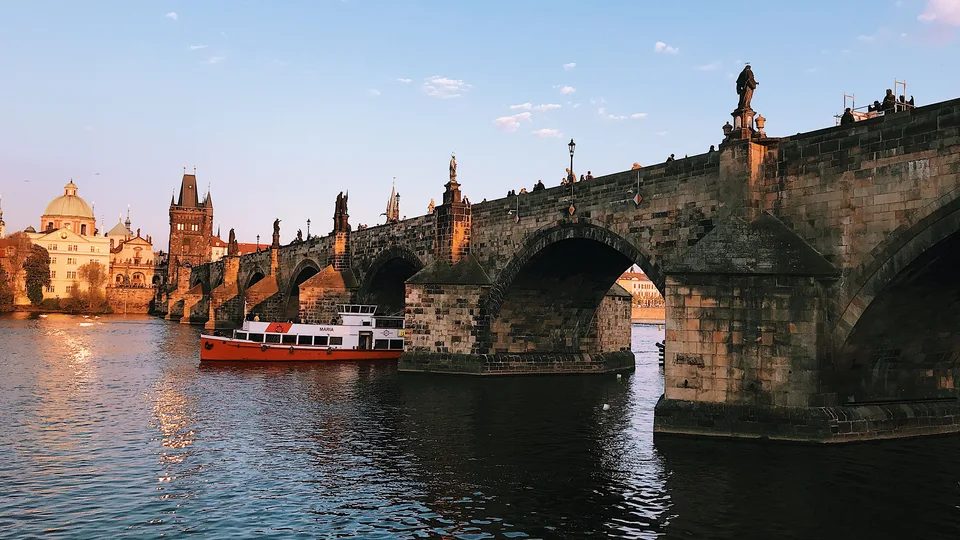
- Charles Bridge strategy: the bridge itself is flat and pedestrian-only, but it's cobbled and packed from mid-morning. Cross before 9 AM or after sunset for the calm, magical version — the crowds are the hard part, not the walk.
Prague Castle Without the Climb
Prague Castle — the largest ancient castle complex in the world — sits on a hill above Malá Strana, and the climb from the river is the classic mistake. Do it the other way:
- Arrive at the top: take tram 22 to the Pražský hrad stop, which leaves you essentially at the castle's doorstep. Arrive early morning or late afternoon to dodge the tour-bus peak.
- Senior admission: the castle offers reduced senior admission (around a third off standard adult rates) — bring ID and ask at the ticket desk.
- Time the guard ceremony: the main Changing of the Guard happens at noon daily in the first courtyard — arrive by 11:40 for a viewing spot. (Smaller changes happen on the hour.)
- See the essentials: St. Vitus Cathedral, the Old Royal Palace, and the Golden Lane. The cathedral is the showpiece; the Golden Lane's tiny colorful houses are a gentle stroll.
- Walk downhill, always: after the castle, drift down through Malá Strana (Lesser Town) toward the river — Nerudova street is charming but steep, and gravity is your friend only in one direction.
And the honest alternative: if the castle feels like too much on the day, the view of it from across the river — floodlit at dusk from the Old Town embankment — is free, flat, and genuinely spectacular. There is no shame in admiring it from below with a svařák in hand.
The 2026 Christmas Markets: A 50+ Playbook
Prague at Christmas is the reason many 50+ travelers come — and it's best done slowly. Confirmed 2026 dates for the two flagship markets:
- Old Town Square & Wenceslas Square: 28 November 2026 – 6 January 2027, daily 10:00–22:00. Shorter hours on Christmas Eve (10:00–14:00), Christmas Day and St. Stephen's Day (12:00–22:00), New Year's Eve (10:00–15:00), and New Year's Day (12:00–22:00).
- The big tree on Old Town Square is lit on opening day, 28 November, with a light-and-music show running several times each evening through the season.
- The locals' pick: Náměstí Míru in Vinohrady opens earlier (20 November – 24 December, 10:00–20:00), with cheaper prices, fewer tourists, and a genuine neighborhood feel.
- Entry to every market is free — you pay only for food, drink, and gifts.
The 50+ market strategy: one market per outing, never both big ones in a day. Go on a weekday morning for the calmest version; the Old Town Square crowds peak in the evenings before each tree light show. Budget around 80–100 CZK (about €3–4) for a mulled wine (svařák) at the central markets, plus a refundable ceramic-mug deposit of about 50 CZK — return the mug to a stall of the same operator to get the deposit back, or keep it as the souvenir.
Old Town Square & the Astronomical Clock, Done Gently
The Old Town Square is the flat heart of Prague — Gothic, Renaissance, and Baroque architecture on every side, the Týn Church's twin spires, and the famous Astronomical Clock on the Old Town Hall:
- The clock strikes on the hour: the little procession of apostles appears hourly — arrive 10 minutes early for a front spot, then you're done. It's charming; it's also about two minutes long, which is the perfect 50+ attraction length.
- The Old Town Hall tower: the viewing gallery has Prague's finest Old Town panorama. A lift is available for an additional fee — worth every crown on tired legs — and admission is reportedly half price in the first hour after opening, the quietest hour of the day.
- The café strategy: the square is ringed with historic cafés. Claim a window seat, order one coffee, and let the square perform for you. This is the Czech equivalent of the pub rest stop, and it works beautifully.
- Týn Church: admire the exterior from the square; the interior is worth a look if the queue is short, but the square itself is the main event.
The Vltava from a Seat: River Cruises
Seeing Prague from the water is the ultimate low-effort sightseeing — the castle, Charles Bridge, and the embankments all glide past while you sit:
- Short sightseeing cruises (around 50 minutes) depart near Čech Bridge — all the postcard views, none of the walking, and an easy add-on to any Old Town day.
- Longer lunch and dinner cruises run a couple of hours with the city lit up — book the evening sailing for the floodlit castle, and confirm the boat has indoor seating for cold months.
- Book at the dock or direct: street kiosks add commission. Walk to the departure point and buy from the operator — or book the operator's own website the day before.
- The free version: the river embankments (náplavka) on both sides are flat, paved riverside promenades — ideal for a gentle sunset stroll with the castle glowing across the water.
For more holiday-season European capitals done the comfort-first way, see our Vienna After 50 guide — another city that does Christmas markets beautifully. And if holiday airfares are on your mind, our 2026 holiday booking guide explains when to buy.
Day Trips Worth the Effort
Prague is an excellent base for low-effort day trips — the key is choosing the flat ones and being honest about the hilly ones:
- Kutná Hora (~1 hour by train): the famous Sedlec Ossuary (the "bone chapel") and the magnificent St. Barbara's Cathedral. Honest caveat: the ossuary involves stairs down into the crypt — skip it if stairs are an issue and enjoy the cathedral and old town at street level instead.
- Mělník (~40 minutes by bus): the underrated pick — a wine town at the confluence of the Vltava and Labe rivers, with a chateau, wine tasting, and far fewer hills and crowds than the famous-name destinations.
- Terezín (Theresienstadt): the WWII memorial and former ghetto, reachable by direct bus. Solemn and important; the grounds are mostly flat and guided tours handle the logistics.
- Český Krumlov — the honest skip: famously beautiful, famously hilly, and a long day trip. Save it for a trip where you stay overnight — or admire it in photos and spend the day on the Vltava instead.
When to Visit
May–June: the sweet spot — long days, gardens in bloom, mild weather, and the river at its best. Late May into June can be genuinely lovely.
September: the crowds thin after summer, the light turns golden, and prices soften. A refined choice for unhurried travel.
28 November 2026 – 6 January 2027: the Christmas markets. December is magical but cold, with short days — dress in warm layers, wear shoes that grip icy cobbles, and plan indoor café and museum breaks. Book hotels early; this is peak season.
January–March: quiet, cold, and often grey — but also the cheapest hotels and the emptiest sights. Prague's cafés and beer halls have never been cozier.
July–August: the busiest, hottest, and priciest months. Prague is still wonderful, but the Old Town crowds test everyone's patience — if summer is your window, do the early-morning strategy religiously.
One constant in every season: Prague weather changes fast. Layers, a proper rain jacket, and shoes that grip wet cobbles are non-negotiable — pack them and the city is yours.
Area Map
Frequently Asked Questions
Is Prague good for seniors with limited mobility?
Prague's Old Town and riverfront are flat and compact, which works well — but nearly everything is cobbled, so supportive footwear and a cane-friendly pace matter. The castle district is the hill: ride tram 22 to the top instead of climbing. River cruises, trams, and the flat New Town make Prague very doable with strategy rather than stamina.
Do seniors really get free public transport in Prague?
Yes. Anyone aged 65 or older rides Prague's entire public transport network — metro, trams, buses, and the Petřín funicular — completely free; no card or registration needed, just carry your passport as proof of age. Travelers aged 60–64 get half-price tickets with passport ID. This applies on regular routes from the airport too.
Is Prague safe for solo women travelers over 50?
Prague is widely considered a safe city for solo travelers. The central areas — Old Town Square, Wenceslas Square, Charles Bridge — stay busy and well-lit into the evening, and dining or drinking alone in a café is completely normal here. Standard big-city awareness still applies: watch for pickpockets in crowds, skip unlicensed taxis, and be cautious with money-changers offering "0% commission" rates.
When do the Prague Christmas markets open in 2026?
The two flagship markets — Old Town Square and Wenceslas Square — run 28 November 2026 to 6 January 2027, daily 10:00 to 22:00 (shorter hours on 24–26 December, New Year's Eve, and New Year's Day). The locals' favorite at Náměstí Míru opens earlier, 20 November, and closes on Christmas Eve. Entry to all markets is free.
Get Price-Drop Alerts for This Destination
Watching fares? We'll email you when prices drop 10% or more. Free.
Set a Free Price Alert →