Seville After 50: A Comfort-First Guide for Travelers 50+
Orange trees, tiled plazas, and golden light — here's how to enjoy Seville comfortably after 50, from the Alcázar gardens to a slow evening in Triana.
⚡ Key Takeaways
- Best months: November and March–May. November days are typically around 70°F (21°C) — warm enough for patios, cool enough for comfortable walking.
- Best base: Santa Cruz or Arenal — flat, central, and full of places to sit down. Triana across the river is quieter and full of flamenco.
- Don't miss: the Alcázar gardens (book timed tickets ahead), Plaza de España at sunset, and one seated flamenco show.
- Getting around: walk the old town — it's flat and compact. Taxis and the tram cover everything else; no car needed in the city.
- November bonus: the orange trees are heavy with fruit, the summer crowds are gone, and hotel rates soften.
- Summer warning: June–September regularly tops 95°F (35°C) and often reaches 104°F (40°C). If you come then, plan around shade and siestas.
Is Seville Worth It After 50? The Honest Answer
Seville is one of the kindest big-city breaks in Europe for travelers 50+: a flat, compact old town you can genuinely walk, world-class sights within minutes of each other, long slow lunches, and some of the warmest November weather on the continent. It is also gloriously unhurried — sit under an orange tree with a coffee, and the city comes to you.
The honest caveats: summer heat is serious, some lanes are cobbled and uneven, and the Alcázar and cathedral are popular enough that you must book ahead or queue. None of that should stop you — all of it should shape how you plan the days. If you liked the gentle pace of Porto's riverfront or Lisbon's hotel comforts, Seville is the warmer, flatter, more fragrant cousin.
When to Go: November Is the Sweet Spot
November may be the best month of all: daytime highs typically around 70°F (21°C), cool evenings in the 50s, orange trees heavy with fruit, and the summer crowds long gone. March through May is equally lovely, with spring festivals and jasmine in the air — though Holy Week and the April Fair bring big crowds and higher prices, so check the calendar before you book.
June through September is genuinely hot, regularly above 95°F (35°C) and often reaching 104°F (40°C). If you do visit in summer, do everything outdoors before 11 a.m. or after sunset, treat shade and water as non-negotiable, and lean into the siesta — the city itself slows down in the afternoon, and you should too. Winter (December–February) is mild and quiet, with daytime temperatures often in the low 60s°F.
Where to Stay: Santa Cruz, Arenal, and Triana
Santa Cruz — Best Overall
The old Jewish quarter: whitewashed lanes, flower-filled patios, and orange trees on every corner, steps from the cathedral and the Alcázar. It is the most atmospheric base in the city — and the most walkable, since the big sights are minutes away on foot. The lanes are narrow and can be uneven underfoot, so choose a hotel on a wider street if mobility is a concern, and confirm elevator access before booking.
Arenal — Flat and Convenient
Just west of Santa Cruz, between the river and the old town, Arenal is flatter, a little more open, and close to the bullring, the riverfront promenade, and the walk to Plaza de España. A good choice if you want easy, level strolling and restaurants with tables spilling onto wider squares.
Triana — Quieter and Full of Flamenco
Across the Isabel II bridge, Triana is Seville's old potters' and flamenco quarter: tiled facades, ceramic workshops, and the city's most authentic evening scene. It is calmer at night and a short, flat walk back over the bridge to the old town — lovely for a slower stay, especially if you want to hear flamenco where it was born.
Whichever area you choose, look for a ground-floor room or a reliable elevator, a walk-in shower, and blackout shutters for the bright Andalusian mornings. Our hotel checklist approach applies just as well here: elevator access, a real chair to sit in (not just a bed), and a quiet room away from late-night bar streets.
What to Do: The Comfort-First Hit List
The Alcázar: a palace of tiled courtyards and shaded gardens that rewards slow looking. Book timed tickets on the official site well ahead — same-day tickets often sell out. Once inside, take the gardens at your own pace: they are mostly flat, with benches, fountains, and shaded paths, and you can sit as often as you like. Allow at least two unhurried hours.
Seville Cathedral and the Giralda: the largest Gothic cathedral in the world, and its bell tower is climbed by ramps, not stairs — 35 gentle ramps with no steps at all. It is still a steady uphill walk with no elevator, so take it slowly and rest at the landings; the view over the orange-tree rooftops is worth it. If you skip the climb, the cathedral floor and the Patio de los Naranjos (orange-tree courtyard) are magnificent at ground level.
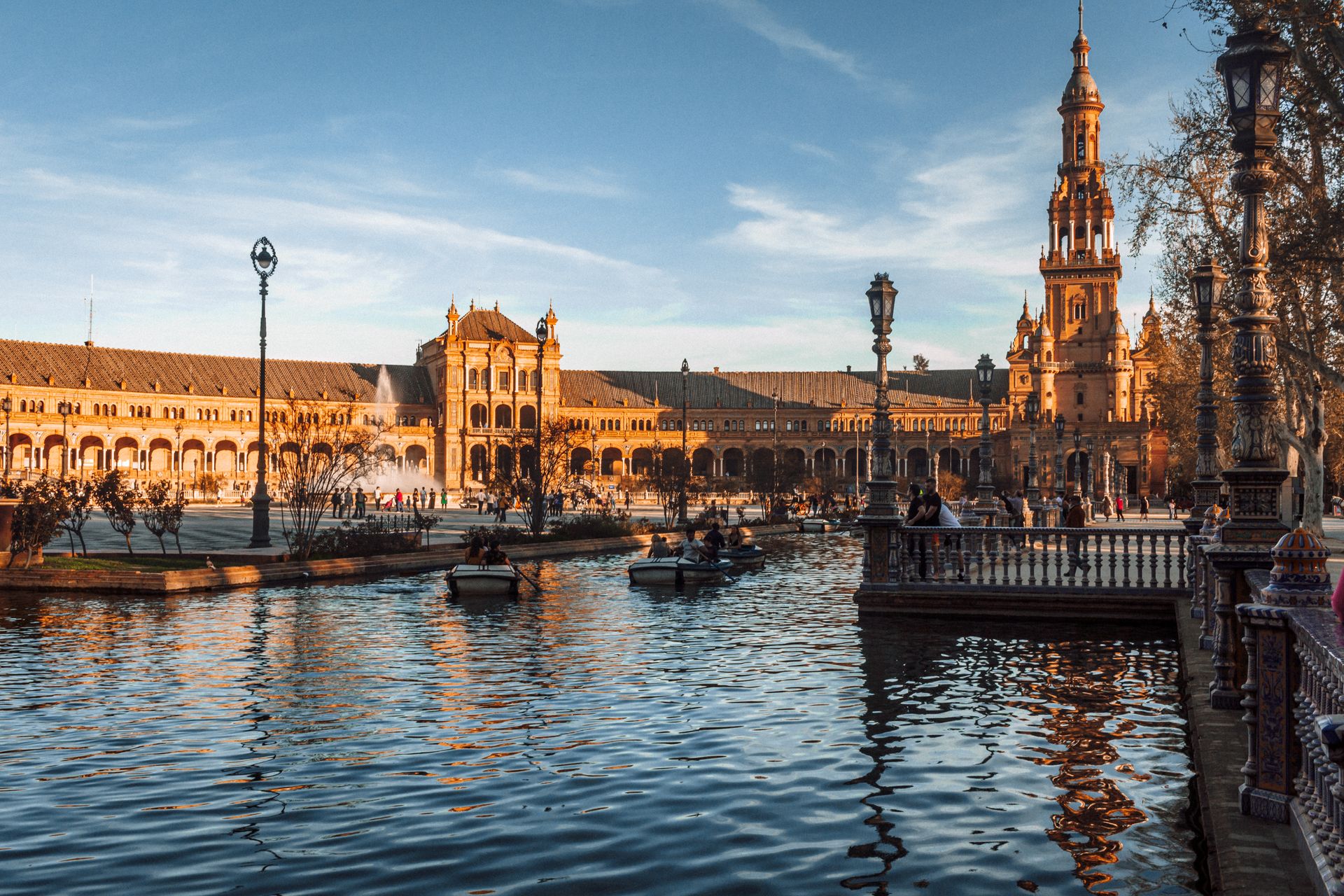
Plaza de España: the city's great semi-circular plaza, free to enter, with a canal, tiled bridges, and painted alcoves for every Spanish province. Go at sunset, when the tiles glow and the crowds thin — and if you fancy it, hire one of the little rowboats on the canal for a gentle drift (a small fee applies). It is flat, open, and full of benches.
Flamenco, seated: Seville is the home of flamenco, and the honest, comfortable way to see it is a seated show in a small venue — Triana has several, and the old town has intimate tablaos. Book ahead, arrive early for the best seats, and expect an hour of intense, beautiful performance. Avoid touts selling "free" shows in the street.
Tapas, the slow way: forget the standing-room-only bars unless you enjoy them — Seville has plenty of restaurants with tables where you can order a few small plates at a time and linger. Lunch is the main meal, usually from around 2 p.m.; dinner is late, often after 9 p.m., so an early-evening tapas crawl suits most travelers 50+ far better.
Day Trips: Honest Notes
Córdoba (about 45 minutes by high-speed train): the Mezquita — a mosque-cathedral unlike anything else in Europe — and a flower-filled old town that is just as flat and walkable as Seville's. An easy, genuinely rewarding day trip; book train tickets ahead, as the fast trains sell out on weekends.
Ronda (about 2 hours by bus or car): the famous gorge town, dramatic and beautiful — but be honest with yourself about the walking: Ronda's viewpoints involve slopes and steps. Go if you love views and don't mind a slower pace with rests; skip it if steep streets are a problem.
Jerez (about 1 hour by train): sherry country, with bodega tours that are mostly seated tastings and a compact, flat old town. A gentler day trip than Ronda, and a good one if you enjoy wine culture without the walking.
Italica (about 30 minutes by bus): Roman ruins on Seville's doorstep, including one of the largest amphitheaters in the empire. The site is open-air and mostly flat, with little shade — go in the morning and bring a hat.
Getting There and Around
Seville Airport (SVQ) is small and calm, with a direct bus to the city center that takes about 35 minutes — or a taxi straight to your hotel door, which is worth it if you have luggage. Many visitors also arrive by high-speed train at Santa Justa station, an easy taxi or bus ride from the old town.
Inside the city, you do not need a car — in fact, driving in the old town is a headache best avoided. Walk the center, take the tram along Avenida de la Constitución for the longer stretches, and use taxis for Plaza de España and the riverfront. Buses are frequent but can be crowded at rush hour; if you prefer not to stand, a taxi is rarely expensive within the city.
Seville Comfort Checklist
Before you leave the hotel each morning
- Shoes: comfortable walking shoes with grip — cobbles and tiles get slippery when wet, and the prettiest lanes are the uneven ones.
- Water: carry a bottle, even in November — Andalusian sun is stronger than it feels, and the air is dry.
- Sun: sunscreen and a hat, year-round. The light here is part of the charm and part of the hazard.
- Timing: sightsee in the mornings, rest in the afternoon, and come back out for the golden evening — Seville's best hour is the one before sunset.
- Oranges: the trees are beautiful and the fruit is bitter — Seville oranges are for marmalade, not eating. Admire, don't pick.
Area Map
Frequently Asked Questions
What is the best month to visit Seville after 50?
November is one of the best months: daytime highs are typically around 70°F (21°C), the orange trees are in fruit, and the summer crowds are gone. March through May is equally lovely. Summer (June–September) regularly tops 95°F (35°C) and often reaches 104°F (40°C) — best avoided unless you plan your days around shade, siestas, and air conditioning.
Is Seville walkable for seniors?
Yes — the old town is one of the flattest and most compact historic centers in Europe. The cathedral, the Alcázar, and the Santa Cruz quarter are all within easy walking distance of each other, and much of the center is pedestrian-only. Do wear shoes with grip: some lanes are cobbled and can be uneven, and the beautiful tiles get slippery when wet.
Is climbing the Giralda tower manageable after 50?
The Giralda is climbed by 35 ramps, not stairs — it was built wide enough for horses — so there are no steps to negotiate, but it is a steady uphill walk with no elevator. Take it slowly, rest at the landings, and skip it without regret if your knees or stamina say no: the cathedral floor and the orange-tree courtyard are magnificent at ground level.
Do I need to book the Alcázar in advance?
Yes — book timed tickets on the Alcázar's official site well before your trip, especially for November weekends. Same-day tickets often sell out. Once inside, the gardens are mostly flat with plenty of benches and shaded paths, so you can take the visit entirely at your own pace.
Get Price-Drop Alerts for This Destination
Watching fares? We'll email you when prices drop 10% or more. Free.
Set a Free Price Alert →