Edinburgh After 50: A Comfort-First Guide for Travelers 50+
Scotland's capital is dramatic, rewarding, and entirely doable after 50 — if you stop trying to climb it. Here's the comfort-first strategy: flat bases, buses that do the hills, and the castle without the climb.
⚡ Key Takeaways
- Why it suits 50+: compact center, superb bus tours, free castle mobility vehicle, and a pub culture that treats rest stops as the point.
- Best base: the New Town around Princes Street — flat, central, well connected. Avoid the Old Town's hills unless your knees are up for it.
- The hill strategy: hop-on-hop-off open-top buses cover every major sight; walk downhill only, never up.
- The castle, comfortably: book a timed ticket, ride the free mobility vehicle from the Esplanade to Crown Square, allow 2–3 hours.
- Rail savings: travelers 60+ get a Senior Railcard — a third off most UK rail fares for £35 a year.
- Best months: May–June and September; December for the Christmas markets (14 Nov 2026 – 3 Jan 2027).
Is Edinburgh Worth It After 50? The Honest Answer
Edinburgh is one of Europe's most atmospheric cities — a medieval Old Town stacked beneath a castle on a volcanic rock, facing a graceful Georgian New Town across a valley of gardens. For travelers 50+, it offers something rare: genuinely dramatic scenery without leaving the city, world-class museums (several free), and a food-and-drink culture built around sitting down.
The honest caveat is the terrain. The Old Town is steep and cobbled; the Royal Mile runs uphill from Holyrood to the castle; even fit visitors feel it. Edinburgh rewards the traveler who plans around the hills instead of fighting them — which is exactly what this guide is for. If you can walk comfortably on the flat and ride a bus up the rest, Edinburgh will give you everything.
Where to Stay: Three Comfort-First Neighborhoods
New Town (Princes Street / George Street) — Best Overall for 50+
Edinburgh's elegant 18th-century grid: wide, largely flat streets, the city's best shopping, and the castle view from Princes Street Gardens — the finest free view in Scotland. Waverley station, the tram line, and nearly every bus route are minutes away. This is the base that asks the least of your legs while putting the most within reach.
Old Town (Royal Mile / Grassmarket) — Atmospheric, Demanding
Sleeping on the Royal Mile means stepping out into centuries of history — and into cobblestones, steep closes, and staircases. Wonderful if your mobility is good and you love character; tiring otherwise. If you choose it, confirm the hotel has a lift (many are in historic buildings) and pack your most supportive shoes.
Leith — Quieter, Good Value, Waterfront
The old port district down by the water: home to the Royal Yacht Britannia, excellent restaurants, and generally lower prices than the center. The tram runs straight from Leith to Princes Street, so the center is an easy ride away. A smart pick for longer, slower stays.
Hotel checklist for Edinburgh: a lift (ask explicitly — "lift," not "elevator"), a walk-in shower rather than a high-sided tub, a quiet room away from Royal Mile nightlife if you're a light sleeper, and proximity to a tram or bus stop. Many UK attractions and hotels offer senior or concession rates — it never hurts to ask at booking.
Getting Around Without Wearing Yourself Out
Edinburgh's public transport is good, but the real comfort secret is the sightseeing bus:
- Hop-on-hop-off open-top buses: this is the single best mobility investment in Edinburgh. The routes loop past the castle, the Royal Mile, Holyrood, the New Town, and (on some routes) the Royal Yacht Britannia — with live or recorded commentary and no hill-climbing required. Ride the full loop first, then hop off only where you want to linger.
- Trams: Edinburgh Trams run from the airport through the city center to Leith and Newhaven — step-free, smooth, and the most comfortable airport transfer. Far easier than hauling luggage uphill from Waverley.
- Lothian buses: the city's regular buses are frequent and cover everywhere the trams don't. Day tickets are inexpensive and remove the friction of paying per ride.
- Taxis: plentiful and reasonably priced — use them between distant sights without a second thought, especially in the evening or in rain.
- The downhill rule: the Royal Mile runs uphill from the Palace of Holyroodhouse to the castle. Take the bus or a taxi to the top, then stroll down — never the reverse.
Edinburgh Castle Without the Climb
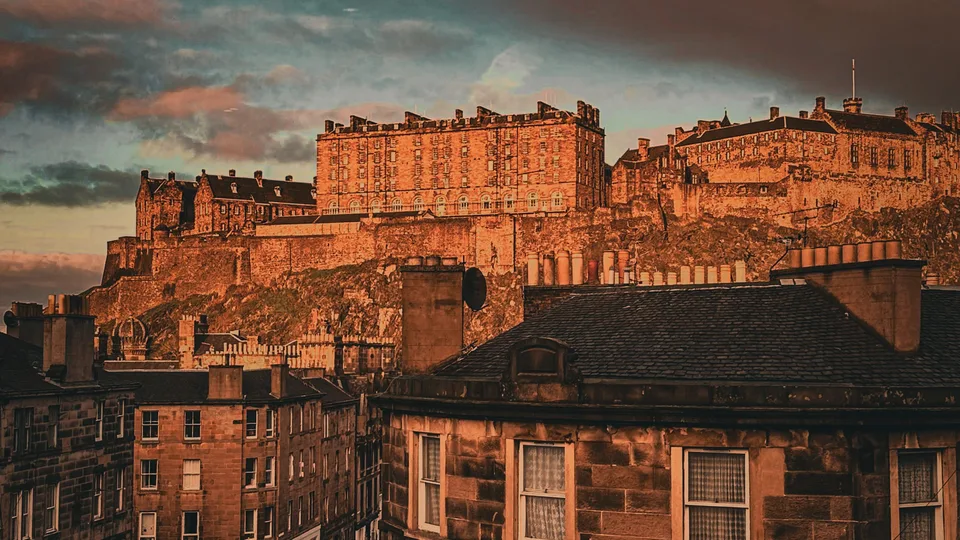
The castle is Scotland's most-visited paid attraction, and the approach is the hard part: a steep, cobbled route of roughly 350 metres from the Esplanade to the summit, with gradients reaching 15 degrees at the steepest section. Here's how to do it comfortably:
- Book a timed ticket online in advance — you'll skip the ticket lines, which matters more than it sounds on tired feet. Allow 2–3 hours inside.
- Ride the free mobility vehicle from the Esplanade to Crown Square — it runs regularly through the day and bypasses the steepest climb. Manual wheelchairs are also available to borrow from the ticket office.
- See the essentials at the top: the Honours of Scotland (the crown jewels), the Great Hall, and St Margaret's Chapel — the oldest surviving building in Edinburgh. The views from the battlements across the city are spectacular and require no further climbing.
- Time the One O'Clock Gun: the famous gun fires daily (except Sundays and some holidays) — a fun, loud tradition best enjoyed with fingers ready for your ears.
- Carers: accompanying carers can enter free, subject to booking conditions — check when you book.
And the honest alternative: if the castle feels like too much on the day, the view of it from Princes Street Gardens — floodlit at dusk — is free, flat, and genuinely magnificent. There is no shame in admiring it from below with a coffee.
The Royal Mile, Done Gently
The Royal Mile is actually about a mile of connected streets running from the castle down to the Palace of Holyroodhouse. The comfort strategy is simple: start at the top, walk down.
- Take the bus to the castle end first, then let gravity do the work as you drift downhill past St Giles' Cathedral, the closes (narrow alleyways), and the shops.
- Use pubs as rest stops. The Royal Mile's historic pubs are made for this — a seat, a soup or a sandwich, and no one rushing you. This is the Scottish equivalent of the café strategy, and it works beautifully.
- St Giles' Cathedral is worth stepping into: free to enter (donations welcome), stunning interior, and blessedly flat once you're inside.
- Skip Arthur's Seat unless you're a confident hiker — it's a real climb. The views from Calton Hill are nearly as good and far easier to reach (or simply admire both from the bus).
Museums and Whisky at Your Pace
Edinburgh's cultural life suits the savor-don't-sprint traveler — with one rule: one major sight per day, seated tastings only.
- National Museum of Scotland (Chambers Street): free entry, world-class collections from Scottish history to science and design — and one of the great museum buildings to simply sit in. The rooftop terrace has sweeping city views.
- Whisky, seated: book a guided tasting at one of the Royal Mile whisky venues rather than standing at a bar. You'll sit through the whole experience, learn what you actually like, and leave with a favorite bottle identified — the civilized way to do Scotch.
- Royal Yacht Britannia (Ocean Terminal, Leith): consistently rated among Britain's most-loved attractions. The self-guided audio tour is unhurried, most areas are step-free by lift, and the Royal Deck Tea Room serves a proper afternoon tea with water views. Reach it by tram — no hill involved.
- Palace of Holyroodhouse: the King's official Scottish residence at the bottom of the Royal Mile. The state apartments and the ruins of the abbey are evocative; the gardens are a gentle stroll. Check opening times before visiting, as it closes during royal visits.
Senior and concession admission rates are common at paid attractions — always ask, and bring ID.
Day Trips Worth the Effort
Edinburgh is an excellent base for low-effort day trips — the key is choosing boat and rail over boots:
- Stirling Castle by rail: under an hour by train from Waverley, and the castle itself is one of Scotland's grandest — with the bonus that the train journey through the countryside is half the pleasure.
- A Loch Lomond cruise: see the famous loch from the water, seated, with commentary — all the scenery, none of the hiking.
- Sir Walter Scott's Abbotsford: the writer's baronial home in the Borders, reachable by rail — house, gardens, and a very good café.
Book rail day trips in advance for the cheapest Advance fares — and remember the Senior Railcard discount if you're 60+.
When to Visit
May–June: the sweet spot — long daylight hours, gardens in bloom, mild weather. Late May into June can be genuinely lovely.
September: the crowds thin after the festival season, the light turns golden, and prices soften. A refined choice.
August: the famous Festival Fringe — the world's largest arts festival — electrifies the city, but it also packs it: book accommodation months ahead, expect crowds and premium prices, and know that the Royal Mile becomes gloriously chaotic. Thrilling for some, overwhelming for others.
14 November 2026 – 3 January 2027: the Edinburgh Christmas markets fill East Princes Street Gardens with around 70 stalls beneath the floodlit castle — one of Europe's most photogenic winter scenes. Entry is free; it closes on Christmas Day. Dress warmly, wear grippy footwear for icy pavements, and plan indoor museum breaks. Hogmanay (New Year's Eve) celebrations follow right after — book early if that's the dream.
January–March: quiet, dark, and often wet — but also the cheapest hotels and the emptiest attractions. Edinburgh's pubs have never been cozier.
One constant: Edinburgh weather changes fast, in every season. Layers, a proper rain jacket, and shoes that grip wet cobbles are non-negotiable — pack them and the city is yours.
If Edinburgh has you thinking about more UK travel at a comfortable pace, see our London After 50 guide — and for another European capital that does Christmas markets beautifully, our Vienna After 50 guide.
Area Map
Frequently Asked Questions
Is Edinburgh good for seniors with limited mobility?
Edinburgh is hilly and cobbled in the Old Town, so it takes strategy rather than stamina. The New Town is flatter, hop-on-hop-off buses cover every major sight without walking, the castle runs a free mobility vehicle from the Esplanade to Crown Square, and manual wheelchairs can be borrowed at major attractions. Choose a flat neighborhood and let the buses do the climbing.
Is Edinburgh safe for solo women travelers over 50?
Edinburgh is widely considered a safe city for solo travelers. Central areas — the Royal Mile, Princes Street, George Street — stay busy and well-lit into the evening, and dining or drinking alone in a pub is completely normal here. Standard big-city awareness still applies, especially late at night around festival crowds.
What's the best area to stay in Edinburgh after 50?
The New Town around Princes Street and George Street is the best base for 50+: flat streets, central, well served by trams and buses. The Old Town around the Royal Mile is atmospheric but hilly and cobbled — charming for the able-bodied, tiring otherwise. Leith is quieter and good value, with a direct tram to the center.
When is the best time for older travelers to visit Edinburgh?
May–June and September offer the best balance of mild weather and manageable crowds. August brings the famous Festival Fringe — thrilling but packed and pricey, so book far ahead. December brings the Christmas markets (14 November 2026 – 3 January 2027) and Hogmanay, magical but cold with short days.
Get Price-Drop Alerts for This Destination
Watching fares? We'll email you when prices drop 10% or more. Free.
Set a Free Price Alert →