Montreal After 50: A Comfort-First Guide for Travelers 50+
Europe in North America, without the jet lag. Here's how to enjoy Montreal comfortably after 50: Old Montreal at your pace, the métro's senior fare, and winter-proof indoor routes.
⚡ Key Takeaways
- Comfort pick for a base: Old Montreal for charm, downtown for flat streets and elevators everywhere.
- Senior transit fare: 65+ riders pay $2.75 a trip (vs. $3.75) with a $15 photo OPUS card; monthly $66 (vs. $110).
- Notre-Dame Basilica: go early for the blue-and-gold interior without the crowds; check the evening AURA light show.
- Cobblestone caveat: Old Montreal's streets are uneven — supportive shoes and the flat Old Port promenade are your friends.
- Winter-proof: 32 km of heated Underground City walkways connect downtown hotels, shops, and the métro.
- Comfort months: May–June and September–October. November is quiet and good value.
Is Montreal Worth It After 50? The Honest Answer
Montreal is the closest thing to a European city you can reach without crossing an ocean: French on the street signs, café culture on every corner, a 17th-century old town — and the friendliness and safety of Canada. For 50+ travelers it is especially rewarding: the city runs on lingering, tasting, and looking up, and its compact center rewards a slow pace.
Honest caveats: Old Montreal's cobblestones are uneven and tiring underfoot, winter is genuinely cold, and the city sits on a slope — downtown is uphill from the Old Port. None of this should stop you — all of it should shape your plan. If you love French food, history, and walkable neighborhoods, Montreal earns its place. Pair it with our Quebec City guide for a two-city French-Canada trip.
Where to Stay: Old Montreal vs. Downtown
Old Montreal — Charm, With Cobblestones
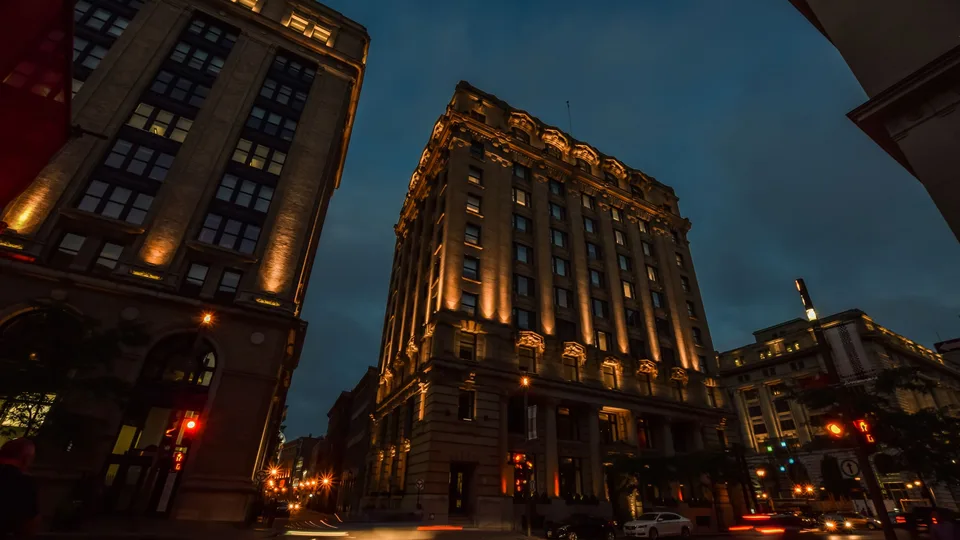
The historic district where the city began in 1642: stone streets, 18th- and 19th-century buildings, boutique hotels in converted warehouses, and the basilica a short walk away. It is small enough to cross in a day and magical at night when the facades are lit. The trade-off is underfoot — cobblestones and a few steps at older building entrances. Choose a hotel with an elevator and a ground-floor entrance, and you get the charm without the strain.
Downtown & the Golden Square Mile — Flat, Practical, Connected
The towers, department stores, and Rue Sainte-Catherine sit a 15–20 minute walk uphill from Old Montreal. Staying here means flat sidewalks, modern hotels with full accessibility, the Museum of Fine Arts nearby, and direct access to the Underground City in cold weather. It is the lower-effort base, and the métro puts Old Montreal three stops away.
The Plateau Mont-Royal — Cafés and Murals
The city's bohemian quarter: colorful row houses, bagel shops, and café-lined streets. Relaxed and residential, with direct métro access. A lovely base if you want neighborhood life over tourist infrastructure — but check for an elevator, as many walk-ups have stairs.
Old Montreal at Your Pace
Start at Place d'Armes, the square facing Notre-Dame Basilica. Go to the basilica early — its deep-blue vaulted ceiling and gilded sanctuary are among the most beautiful church interiors in North America, and the morning light and thinner crowds make it a different experience. The evening AURA light show, projected inside the basilica, is a seated, 45-minute spectacle worth an evening slot.
From there, stroll Rue Saint-Paul, the old town's main street of galleries, boutiques, and cafés — then drop down to the Old Port promenade, a flat, paved, 2.5 km riverfront walk with benches everywhere, the Clock Tower, and La Grande Roue observation wheel. The Pointe-à-Callière Museum, built over the city's founding site, is a strong museum stop with elevators and seating throughout. Two hours covers a walk-through; half a day with one museum; a full day if you do it properly.
Getting Around: The Métro and the 65+ Fare
Montreal's STM métro and buses are clean, frequent, and easy — and the senior fare is genuinely good value. Riders 65 and over pay $2.75 for a single trip (regular fare $3.75) and $66 for a monthly pass (regular $110), with fares in effect since July 1, 2026. You need a photo OPUS card ($15 for seniors, valid seven years) to use the reduced fare — get one at a métro station ticket office with ID. Montreal residents 65 and over ride free in Zone A.
For Old Montreal, the three Orange line stations are Place-d'Armes (basilica and Pointe-à-Callière), Champ-de-Mars (City Hall, Place Jacques-Cartier, eastern Old Port), and Square-Victoria–OACI (western edge). A single trip is valid for 120 minutes including transfers, so one fare often covers a whole outing. Taxis are plentiful and honest — worth it for the uphill return from the Old Port in the evening.
Mount Royal Without the Climb
Mount Royal is the green hill at the city's heart, and the Kondiaronk lookout beside the Chalet du Mont-Royal gives you the classic panorama: downtown towers, the river, and on a clear day, the Laurentians. The honest version: the park is all inclines. The comfortable version: the 11 bus climbs the mountain to the lookout, so you ride up, enjoy the view, and stroll gently downhill or catch the bus back. Go in late afternoon for golden-hour light over the skyline, and in October the fall colors are spectacular.
Eating Well: Smoked Meat, Bagels, and Bistro Pacing
Montreal eats like nowhere else in North America. The essentials: smoked meat — the city's answer to pastrami, famously at Schwartz's (go early or order takeout to skip the line, and note the narrow, stair-accessed dining room); Montreal-style bagels, smaller, denser, and wood-fired, from St-Viateur or Fairmount Bagel; and the classic French bistros of the Plateau and Old Montreal, where lunch is the generous meal and dinner runs leisurely.
The 50+ adaptation that works: make lunch your big meal, then a light dinner. Markets help too — Jean-Talon Market in Little Italy is one of North America's great public markets, flat, covered, and full of tastings. And yes, try the poutine once. You are in the city that invented it.
Winter-Proof Montreal: The Underground City
Montreal's answer to winter is the RÉSO, the Underground City — 32 km of heated, connected indoor walkways linking downtown hotels, shopping centers, the métro, and major office buildings. In January and February, when the wind off the St. Lawrence bites, you can cross downtown, shop, eat, and catch your train without ever going outside. November is the shoulder sweet spot: quiet streets, good-value hotels, the museums and the Underground City doing the heavy lifting, and the first festive lights appearing in Old Montreal.
Safety: One of North America's Safest Big Cities
Montreal is consistently counted among the safest major cities in North America, and central neighborhoods feel relaxed day and evening. The usual advice applies — crossbody bag, zipped pockets on the métro, normal awareness after dark — but you do not need to be on guard here the way you might in some larger U.S. cities. Solo women travelers over 50 routinely report feeling comfortable walking Old Montreal and downtown alone, including in the evening.
Day Trips: Québec City and the Laurentians
Québec City is about three hours by train or car — the only walled city north of Mexico, and a natural second stop. See our Quebec City senior guide for the full playbook. Closer in, the Laurentians offer village charm and mountain views in under two hours, and Mont-Tremblant makes a gentle resort day in any season. In summer, ferries cross to Île Sainte-Hélène and the South Shore from the Old Port.
Area Map
Frequently Asked Questions
Is Montreal safe for senior travelers?
Yes. Montreal is consistently ranked among the safest major cities in North America. Central neighborhoods like Old Montreal, downtown, and the Plateau feel safe day and evening. Normal big-city awareness — a crossbody bag, zipped pockets on the métro — is all you need.
Is there a senior discount on Montreal public transit?
Yes. Riders 65 and over pay a reduced fare on STM buses and the métro — $2.75 for a single trip versus $3.75 regular, and $66 for a monthly pass versus $110 (fares in effect since July 1, 2026). You need a $15 photo OPUS card to use the reduced fare. Montreal residents 65 and over ride free in Zone A.
Is Old Montreal walkable for older travelers?
Mostly, yes — the district is compact, about a mile and a half long, and the Old Port promenade is flat with benches everywhere. The honest caveat is the cobblestones: streets like Rue Saint-Paul are uneven and can be tiring. Wear supportive shoes, take the flat riverfront route, and use the Place-d'Armes métro station to skip the uphill walk from downtown.
When is the best time to visit Montreal after 50?
May–June and September–October: mild weather, manageable crowds, and the city at its most comfortable. November is quiet and good value, with the Underground City and museums doing the heavy lifting. Winter is cold but magical — and the 32 km of heated indoor walkways make it surprisingly comfortable.
Get Price-Drop Alerts for This Destination
Watching fares? We'll email you when prices drop 10% or more. Free.
Set a Free Price Alert →More North America guides: Quebec City After 50 · Boston After 50 · Paris After 50