Florence After 50: A Comfort-First Guide for Travelers 50+
Renaissance art at your pace: the Duomo without the climb, the Uffizi in two unhurried hours, and the best view in Florence — reached by bus, not on foot.
⚡ Key Takeaways
- Skip the dome climb guilt-free: 463 steps, no lift — and the bus-up view from Piazzale Michelangelo is better anyway.
- Timed tickets are the whole game: book the Uffizi and the Accademia in advance; you walk in at your slot instead of standing in line.
- One museum a day: the Uffizi deserves two unhurried hours; the Accademia (David) is small and done in one.
- Best base: Oltrarno, across the river — quieter, flatter, artisan workshops, and the Ponte Vecchio is a five-minute stroll.
- November is the quiet season: daytime highs around 55–60°F (13–16°C), thin crowds, better hotel value. Pack a light rain layer.
- Heads-up this week: the Duomo dome is closed for maintenance November 16–20, 2026; the cathedral itself stays open and free.
Is Florence Worth It After 50? The Honest Answer
Florence is the most rewarding art city in Europe for a slow traveler — and the most punishing for a rushed one. The entire historic center is a UNESCO site you can cross on foot in twenty minutes, the Renaissance masterpieces are concentrated in two museums, and the food is honest Tuscan cooking, not tourist theater. For 50+ travelers it works beautifully, because the city rewards lingering: a long lunch, a bench in a piazza, an hour in front of one Botticelli instead of a sprint through ten rooms.
Honest caveats: the cobblestones are uneven and tiring, summer is hot and crowded, and the famous climbs — the Duomo dome, Giotto's Bell Tower, the hill to Piazzale Michelangelo — are all optional. None of this should stop you. It should shape your plan: come in the quiet season, book timed tickets, stay across the river, and let the bus do the climbing. If you love art, food, and walkable old towns, Florence earns its place. Pair it with our Rome guide for a two-city Italy trip.
Where to Stay: Oltrarno vs. the Duomo Area
Oltrarno — Quieter, Flatter, More Florentine
The neighborhood across the Arno, around Santo Spirito and San Frediano, is where Florentines actually live: artisan workshops (leather, gold, paper marbling), family trattorias, and morning markets, with the Ponte Vecchio a five-minute stroll away. Streets here are flatter and quieter than the Duomo side, and the pace is noticeably slower. Choose a hotel or apartment with an elevator and a ground-floor entrance, and you have the most comfortable base in the city.
Duomo Area — In the Middle of Everything
Staying near the cathedral puts the Uffizi, the Accademia, and the shopping streets within a short walk — but also puts you in the thickest crowds, with the noisiest evenings and the highest prices. It works if you want zero transit and don't mind the bustle; pick a hotel set back from the main squares, and confirm the elevator, as many historic buildings have stairs only.
Santa Maria Novella — Practical and Connected
The area around the main train station is flat, practical, and well connected — trains to Siena, Pisa, and Lucca leave from here, and buses fan out across the city. It is less charming than Oltrarno, but the hotels are modern, the streets are wide, and the station's taxi rank makes every arrival and departure easy.
The Duomo Without the Climb
The cathedral of Santa Maria del Fiore is free to enter, and its marble facade and Brunelleschi's terracotta dome are best appreciated from the square below — looking up is the whole experience. The dome climb is 463 steps with no lift, on a staircase built for 15th-century masons, and the bell tower is 414 steps with no lift either. Skip both without a second thought: the view from Piazzale Michelangelo (below) is wider, and you arrive by bus.
Inside, the nave is long and calm, the dome's frescoed interior reads best from the floor of the crossing, and the Baptistery across the square — with its gilded bronze doors — is a seated, ten-minute visit. Buy the combined pass only if you genuinely want the museum and the crypt; otherwise the free cathedral plus the Baptistery is the comfortable version. Heads-up: the dome is closed for maintenance November 16–20, 2026, so plan around it if you are visiting this week — the cathedral, Baptistery, and museum stay open. Check duomo.firenze.it for current hours before you go.
The Uffizi at Your Pace
The Uffizi holds the greatest collection of Renaissance painting on earth — Botticelli's Birth of Venus and Primavera, Leonardo, Michelangelo, Raphael — in a long, light-filled palace beside the Arno. The comfortable way to do it: book a timed-entry ticket in advance from the official site, arrive at your slot, and give yourself two unhurried hours. The museum has elevators and benches in the galleries, a rooftop café with a Duomo view for a mid-visit break, and a logical one-way route that ends at the river.
Do not try to see everything. The Botticelli rooms on the second floor are the essential stop; after that, follow your energy. Late-afternoon slots are the quietest, and the museum stays open into the early evening in season. If the Uffizi is sold out on your dates, the Palazzo Pitti across the river — the Medici palace, with the Palatine Gallery and the Boboli Gardens behind it — is the calmer alternative, though the gardens themselves are hilly and best taken slowly.
David and the Accademia: Small, Manageable, Unmissable
Michelangelo's David stands in the Accademia, a small museum that takes about an hour — a perfect single outing. Book a timed ticket in advance; the walk-in line is the longest in the city. Go first thing in the morning, stand in front of David as long as you like (there are benches in the tribune), then stroll the musical-instrument rooms and leave before the midday crowds arrive. It pairs well with the San Lorenzo market next door: the Mercato Centrale food hall upstairs has seating, tastings, and a proper lunch.
Piazzale Michelangelo by Bus, Not on Foot
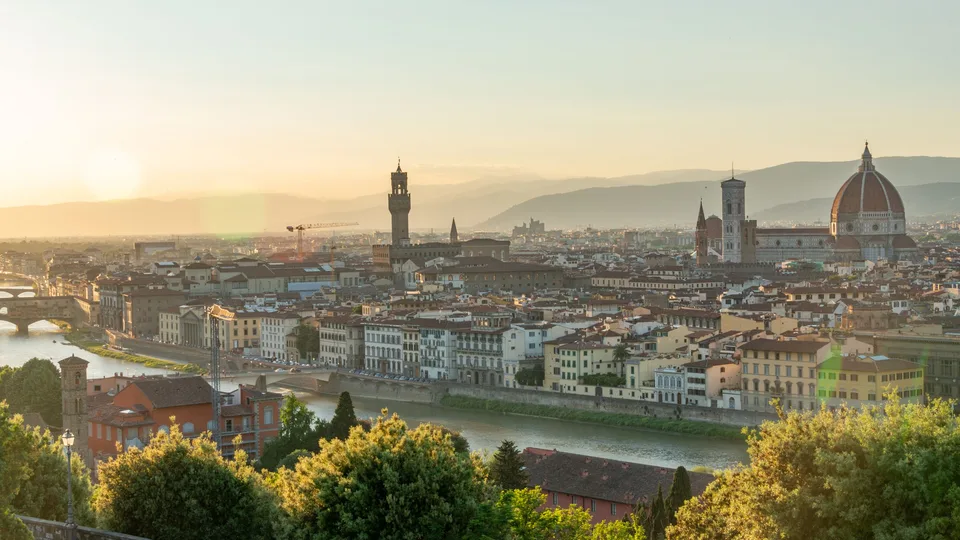
The classic Florence panorama — the Duomo, the Palazzo Vecchio tower, the Arno curving below — is from Piazzale Michelangelo, the terrace across the river. The walk up is steep and exposed; the comfortable version is bus 12 or 13 from the station area, which drops you at the terrace. Go in the late afternoon for golden-hour light, sit on the terrace wall, and take the bus back down. The replica David in the center of the square is a fine photo stop, and the terrace itself is flat with room to sit.
Oltrarno: The Artisan Quarter
Across the Ponte Vecchio, Oltrarno is Florence at its most human. The workshops along Via dei Conciatori and Via Toscanelli still make leather goods, gold jewelry, and marbled paper by hand — many welcome visitors to watch. Piazza Santo Spirito is the neighborhood's living room: a morning market, cafés with outdoor tables, and Brunelleschi's church with its quiet, unadorned interior. On Sundays the square fills with a flea market; on summer evenings it fills with locals and live music. It is the Florence to come back to after the museums close.
Eating Well: Lunch as the Main Meal
Florence eats generously and simply: ribollita (bread-and-bean soup), pappa al pomodoro, bistecca alla fiorentina to share, and gelato that is a food group of its own. The 50+ adaptation that works here: make lunch your big meal — the trattorias of Oltrarno and Santo Spirito serve full menus at midday for less than dinner — then a light evening of soup, salad, or a panino. The Mercato Centrale food hall is a comfortable lunch stop with seating and choice; the wine windows (buchette del vino) dotted around the old town are a charming, quick glass without the restaurant commitment.
One practical note: many small restaurants have a few steps at the entrance and no elevator to an upstairs dining room. If stairs are a concern, ask when booking — Florentine hosts are famously accommodating and will seat you on the ground floor.
Day Trips: Siena, Pisa, and Chianti
Siena is about 75 minutes by bus from the station area — a hill town with a shell-shaped piazza, a striped cathedral, and a slower rhythm than Florence. The bus drops you near the center, which spares you the climb from the train station below. Pisa is an hour by train, and the Field of Miracles (tower, cathedral, Baptistery) is a flat, ten-minute walk from the station; the tower climb is 296 steps and entirely optional. Chianti is best as a small-group wine tour with hotel pickup — the driver handles the hills, you handle the tasting. Lucca, an hour and twenty by train, is flat inside its Renaissance walls and made for a gentle bike ride or a slow walk on the ramparts.
Safety: A City That Rewards Normal Awareness
Florence is a safe, well-trodden city, and solo women travelers over 50 routinely report feeling comfortable here, including in the evening around Santo Spirito and the Ponte Vecchio. The usual advice applies: a crossbody bag, zipped pockets in crowded squares and on buses, and normal awareness around the station at night. Pickpockets work the Duomo square and the Ponte Vecchio at peak hours — the same spots everyone photographs. November's thin crowds make all of this easier.
Area Map
Frequently Asked Questions
Is Florence walkable for travelers over 50?
Yes — the historic center is compact and mostly flat, and the main sights sit within about a mile of each other. The honest caveats are the cobblestones, which are uneven underfoot, and the hills south of the Arno. Wear supportive shoes, plan one museum a day, and use bus 12 or 13 to Piazzale Michelangelo instead of walking up.
Do I need to climb the Duomo dome in Florence?
No. The dome climb is 463 steps with no lift, and it is entirely optional. The cathedral itself is free to enter, the view from Piazzale Michelangelo (reached by bus) is better than the view from the dome, and Giotto's Bell Tower is also a 414-step climb you can happily skip. Note the dome is closed for maintenance November 16–20, 2026.
How do I avoid long lines at the Uffizi and the Accademia?
Book timed-entry tickets in advance from the official sites — the Uffizi and the Accademia (home of Michelangelo's David) both sell out, especially on weekends. A timed ticket means you walk in at your slot instead of standing in line. Go first thing in the morning or late afternoon for the thinnest crowds.
When is the best time to visit Florence after 50?
November through March is the quiet season: daytime highs around 55–60°F (13–16°C), far fewer crowds, and better hotel value — though you should expect some rain and shorter days. April–May and September–October are the classic sweet spots: mild weather and long light. Summer is hot, crowded, and best avoided if you can choose.
Get Price-Drop Alerts for This Destination
Watching fares? We'll email you when prices drop 10% or more. Free.
Set a Free Price Alert →More Europe guides: Rome After 50 · Paris After 50 · Seville After 50 · Barcelona After 50