San Francisco After 50: A Comfort-First Guide for Travelers 50+
Hills, fog, and the Bay — the comfortable way. Here's how to enjoy San Francisco after 50: flat bases, the senior transit fare, cable cars without the queue, and Alcatraz booked right.
⚡ Key Takeaways
- Comfort pick for a base: Union Square or Fisherman's Wharf — both flat, central, and full of elevators and taxis.
- Senior transit fare: 65+ riders pay $1.40 a Muni ride with Clipper ($1.50 cash, vs. $2.85 adult); monthly $43. BART is 62.5% off with a Senior Clipper card.
- Cable cars: $9 a ride, no transfers — seniors pay $4 only before 7 a.m. or after 9 p.m. Two rides in a day? The $15 1-day Visitor Passport wins.
- Alcatraz: book as soon as dates are fixed — tickets open 90 days out and sell out weeks ahead. Island tours resume November 19, 2026 after dock repairs.
- Hill strategy: ride up, walk down. The flat Embarcadero, Crissy Field, and Golden Gate Park do the walking for you.
- Comfort months: September–October are the warmest and clearest. November is quiet, mild, and good value.
Is San Francisco Worth It After 50? The Honest Answer
San Francisco rewards a slow pace like few American cities: a compact 7-by-7-mile peninsula, a waterfront that stays flat for miles, world-class museums, and food that runs from Ferry Building farmers-market stalls to some of the country's great dim sum. For 50+ travelers it is especially rewarding — the city runs on lingering, tasting, and looking across the Bay.
Honest caveats: the hills are real, the summer fog is cold, and the wind off the Bay never really stops. None of this should stop you — all of it should shape your plan. Stay somewhere flat, let the buses and cable cars do the climbing, and pack a windproof layer in every season. If you love views, food, and walkable neighborhoods, San Francisco earns its place. Pair it with our Napa guide for a wine-country add-on.
Where to Stay: Union Square vs. Fisherman's Wharf
Union Square — Flat, Central, Connected
The city's shopping and theater heart, and the flattest downtown base: level streets, big hotels with full accessibility, the Powell Street cable car turnaround at your door, and BART and Muni Metro underneath. It is the lower-effort base, and the F-line streetcar runs from nearby Market Street straight down the Embarcadero to the Wharf. The trade-off is downtown energy — it can feel busy, and a few blocks west the streets get rougher after dark.
Fisherman's Wharf — Flat, Touristy, Convenient
The waterfront district where the ferries, the sea lions at Pier 39, and the cable car termini all meet. It is flat, walkable, and genuinely pleasant in the morning before the crowds arrive — and staying here puts Alcatraz departures at Pier 33 a short stroll away. The trade-off is that it is the most touristy corner of the city, with chain restaurants and souvenir shops. Choose a hotel with an elevator and a quiet room facing away from the street, and you get the convenience without the noise.
The Marina & Japantown — Quiet and Residential
The Marina District, beside the water at the foot of the bridge, is flat, calm, and full of cafés — a lovely base if you want neighborhood life and morning walks along the Bay. Japantown, inland and equally level, offers a peaceful pocket of shops and restaurants with easy bus links downtown. Both are quieter than the two main bases, but check the bus routes before booking — you will ride more often from here.
The Hill Strategy: Ride Up, Walk Down
San Francisco's hills are the city's signature and its main physical challenge. The strategy that works: never climb on foot when a vehicle will do it for you. Ride the bus or cable car to the top, enjoy the view, and stroll gently downhill. The Powell–Hyde cable car climbs from Powell and Market over Nob Hill to the Wharf — ride it once for the experience, then walk the flat waterfront back. The F-line historic streetcars run the length of Market Street and the Embarcadero at regular Muni fares, and they are a pleasure in themselves: vintage cars from around the world, with seats and a view.
Getting Around: Muni, BART, and the Cable Car Math
Muni buses, Metro light rail, and historic streetcars are clean, frequent, and easy — and the senior fare is genuinely good value. Riders 65 and over pay $1.40 per ride with Clipper ($1.50 cash, versus $2.85 adult), and a senior monthly pass is $43. Show a government photo ID with your birthdate to use the discount fare; for longer stays, a Senior Clipper card (apply online, by mail, or in person) unlocks the same discounts across the whole Bay Area. On BART, a Senior Clipper card gives 62.5% off — the SFO airport ride to downtown drops to a few dollars.
Cable cars are the exception, priced as an attraction: $9 for a one-way ride, no transfers, and the $4 senior fare applies only before 7 a.m. or after 9 p.m. The honest math: two cable car rides in a day cost $18, while a 1-day Visitor Passport is $15 and covers unlimited cable cars plus all Muni. If you plan to ride more than once, buy the Passport. One warning for your budget: SFMTA has approved a fare rise to $12 per cable car ride from January 4, 2027 — check the current fare before you travel.
The Golden Gate Bridge at Your Pace
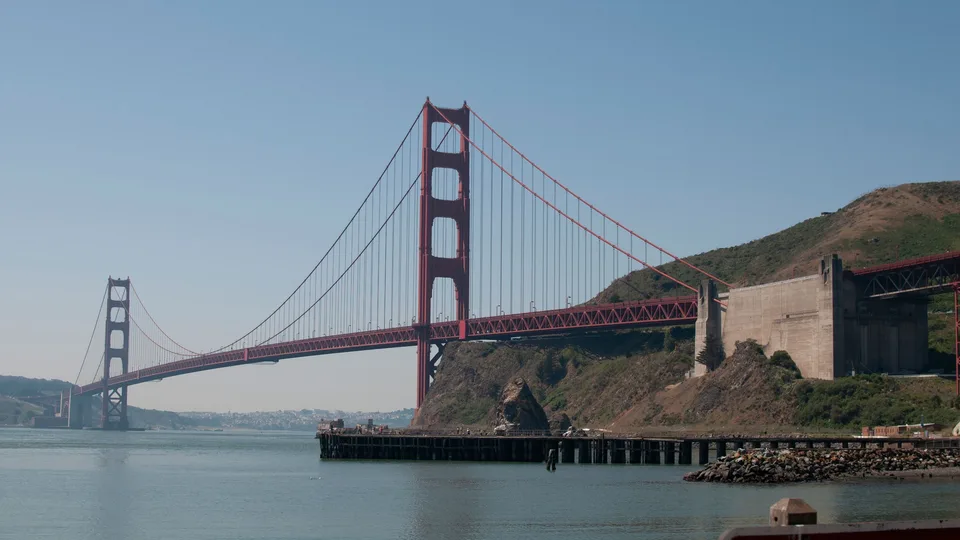
Walking the bridge is free, and the east sidewalk is open to pedestrians — but the honest version is that it is 1.7 miles each way, windy, and exposed. The comfortable version: take the 28 bus to the Golden Gate Bridge Welcome Center, enjoy the plaza views and the exhibits, walk the first span as far as feels good, and turn back. The flat alternative is better still: Crissy Field, the restored waterfront park on the city side, gives you the classic bridge-and-bay view from a level, paved promenade with benches everywhere — and the Warming Hut café at its western end. Fort Point, the Civil War-era fort tucked under the bridge's southern end, is a short, flat walk from the parking area and a fine, sheltered stop.
For the postcard view without the walk, the ferry to Sausalito crosses the Bay in about 30 minutes, sails right past the bridge, and drops you in a flat, café-lined waterfront town made for a slow afternoon. Ride the ferry over, linger over lunch, and ferry back at sunset.
Alcatraz: Book It Right (It Reopens November 19)
Alcatraz is the city's most in-demand ticket, and the booking rules are strict: Alcatraz City Cruises is the only company allowed to dock at the island, tickets go on sale 90 days ahead, and popular dates sell out weeks in advance. Book on the official site the moment your dates are fixed, and ignore street vendors — their tickets are not genuine. Plan on 2.5 to 3 hours round trip, including the ferry.
Two things to know for November 2026: island tours were suspended October 26–November 18 while crews replaced the ferry dock pilings, and tours are scheduled to resume November 19, 2026 — check the official booking calendar before you go. And the honest physical note: the dock sits about a quarter mile and 130 feet below the cellhouse, up a steep paved road. The National Park Service runs the free S.E.A.T. electric tram between the dock and the prison entrance for visitors with mobility needs — ask at the dock on arrival.
Fisherman's Wharf & the Embarcadero: Miles of Flat Walking
The waterfront is San Francisco's gift to older travelers: a level, paved promenade running from the Ferry Building to the Wharf, with benches, cafés, and the Bay on one side the whole way. Start at the Ferry Building — the farmers market (Tuesday, Thursday, Saturday, Sunday) is widely loved, and the hall itself is full of local food stalls. Walk or take the F-line streetcar north past the Exploratorium at Pier 15, the sea lions hauled out on the docks at Pier 39, and the sourdough bakeries of the Wharf. Two hours covers a stroll; half a day with one museum stop; a full day if you do it properly — and it is all flat.
Museums at Your Pace: Golden Gate Park and Downtown
Golden Gate Park is bigger than Central Park, and the sensible way to see it after 50 is one museum at a time, not a forced march. The de Young and the Legion of Honor share one ticket — adults $25, seniors 65+ $22 — and a ticket to one includes same-day admission to the other. Both offer free general admission on the first Tuesday of the month, and free entry to the permanent collection daily after 4:30 p.m. The de Young's tower elevator gives you a free panorama of the park and the city without a climb. Downtown, SFMOMA charges $30 for adults and $25 for seniors 65+, is closed Wednesdays, and rewards a slow morning — go early, sit often, and let the rooftop terrace do the view work.
Eating Well: Sourdough, Dim Sum, and the Farmers Market
San Francisco eats like nowhere else in America. The essentials: sourdough from the Wharf bakeries, dim sum in Chinatown (go mid-morning, when the carts are full and the dining rooms are calm), and the Ferry Plaza farmers market, where a grazing lunch beats a formal one. The 50+ adaptation that works: make lunch your big meal — the city's restaurants are at their most generous midday — then a light dinner near your hotel. And try the cioppino once: the tomato-and-seafood stew is the city's own invention.
Safety: The Honest Picture
Most of San Francisco feels comfortable for older travelers, including solo women over 50, who routinely report feeling at ease in Union Square, the Wharf, the Marina, and the residential west side. The real risk is property crime, and it is specific: never leave anything visible in a parked car — not a bag, not a charging cable, not a jacket. Car break-ins are the city's most common crime, and an empty-looking car is the strongest protection there is. After dark, avoid the Tenderloin and parts of Civic Center, keep to lit, busy streets, and take a taxi or rideshare rather than walking through unfamiliar blocks.
Day Trips: Sausalito, Muir Woods, and Wine Country
Sausalito is the easy one — 30 minutes by ferry, flat waterfront, lunch with a view, ferry home. Muir Woods, the cathedral of coastal redwoods, needs a plan: there is no public bus to the monument, so book the seasonal shuttle or a small-group tour in advance, and expect a short, mostly level boardwalk loop once you are there. Napa and Sonoma are 60–90 minutes by car or tour bus — see our Napa senior guide for the full playbook. And if you have a third day, Monterey and Carmel make a gentle coastal drive south, with the aquarium and the 17-Mile Drive as the payoff.
Area Map
Frequently Asked Questions
Is San Francisco safe for senior travelers?
Mostly, yes — with honest caveats. Union Square, Fisherman's Wharf, the Embarcadero, and the residential neighborhoods west of downtown feel comfortable day and evening. The real risk is property crime: never leave anything visible in a parked car, a rule San Franciscans repeat for a reason. Avoid the Tenderloin and parts of Civic Center after dark, and use the same big-city awareness you would anywhere.
Is there a senior discount on San Francisco public transit?
Yes. Riders 65 and over pay $1.40 per Muni ride with Clipper ($1.50 cash), versus $2.85 adult, and a senior monthly pass is $43. On BART, a Senior Clipper card gives 62.5% off. Cable cars are the exception: $9 a ride for everyone, with a $4 senior fare only before 7 a.m. or after 9 p.m. A 1-day Visitor Passport ($15) covers unlimited cable cars plus all Muni.
How do I handle San Francisco's hills after 50?
Ride up, walk down. Use the cable cars, buses, and the F-line streetcar to climb, then stroll downhill. Stay in a flat neighborhood — Union Square, Fisherman's Wharf, or the Marina — so your hotel is never at the top of a grade. The flat Embarcadero waterfront, Golden Gate Park's eastern end, and Crissy Field give you miles of level walking with the city's great views.
When is the best time to visit San Francisco after 50?
September–October: the city's warmest, clearest weeks, when the summer fog finally lifts. November is the quiet-value sweet spot — mild days, thinner crowds, and lower hotel rates. Summer is foggy and cool, so pack a layer even in July. Whenever you go, bring a windproof jacket: the breeze off the Bay is the one constant.
Get Price-Drop Alerts for This Destination
Watching fares? We'll email you when prices drop 10% or more. Free.
Set a Free Price Alert →More California guides: Napa After 50 · San Diego After 50 · Palm Springs After 50 · Boston After 50